
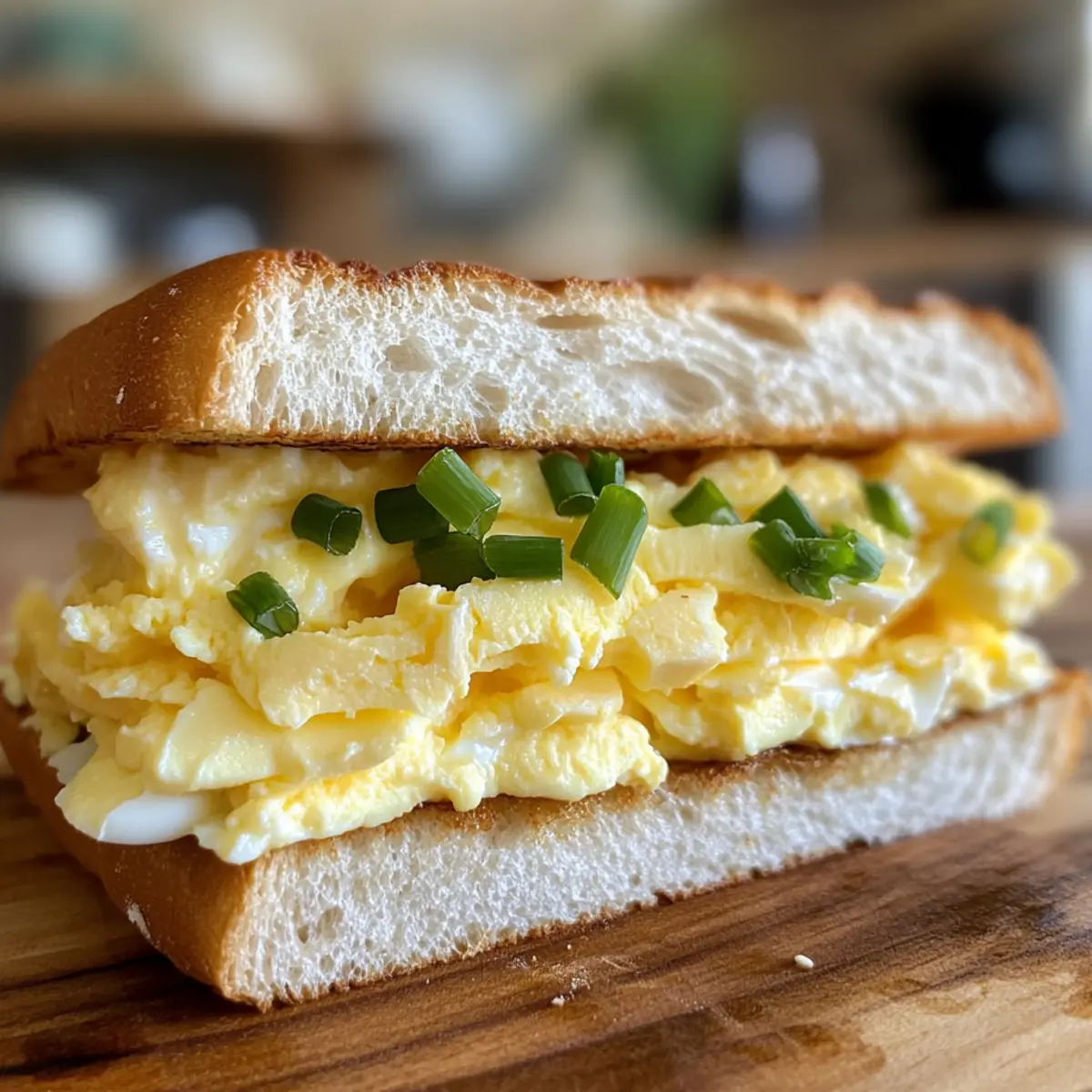
Stepping into the world of comfort food, I find myself captivated by the creamy allure of a Japanese Egg Sandwich, or tamago sando. This delightful masterpiece not only brings back memories of cozy afternoons but also shines in its simplicity—making it an ideal quick meal option for busy days. Picture a soft, fluffy Japanese milk bread cradling a flavorful egg salad that’s as rich in taste as it is in nostalgia. Perfect for light lunches or even a delicious breakfast, this recipe offers a creamy bite that never fails to impress. Plus, it’s just as enjoyable for kids as it is for adults, turning mealtime into a fun culinary experience. Ready to dive into the comforting world of tamago sando? Let’s get started on creating this delicious sandwich together!

Why is Tamago Sando So Special?
Irresistible Comfort: This creamy Japanese egg sandwich epitomizes the warmth of home-cooked meals, providing a comforting escape from fast food.
Quick & Easy: Preparation is a breeze—perfect for busy weeknights or leisurely weekends.
Versatile Taste: Whether you opt for soft or hard-boiled eggs, each bite bursts with rich flavors that can be easily customized.
Crowd Pleaser: Kids and adults alike adore this sandwich, making it an absolute hit for lunchboxes or brunch gatherings.
Unique Ingredients: The creamy Japanese mayonnaise and fluffy milk bread set this sandwich apart, creating a delightful fusion of flavors. If you’re looking to explore more quick recipes, check out the Avocado Melt Sandwich or the Fried Chicken Sandwich for more inspiration!
Japanese Egg Sandwich Ingredients
• Perfect for your next tamago sando!
For the Egg Salad
- Pete and Gerry’s Organic Eggs – Use for rich flavor and creamy texture; quality matters!
- Sugar (1/4 teaspoon) – A hint of sweetness balances the savory richness of the egg salad.
- Salt (1/4 teaspoon) – Enhances overall flavor; adjust according to your taste preferences.
- Ground Black Pepper (1/4 teaspoon) – Adds a delightful hint of heat and depth to the filling.
- Milk or Plant Milk (1-2 teaspoons, optional) – Keeps the salad moist, especially helpful for hard-boiled eggs.
- Japanese Mayonnaise (4 tablespoons) – Adds that rich, creamy flavor that’s essential for an authentic taste.
For the Bread & Assembly
- Japanese Milk Bread (4 slices) – This fluffy, subtly sweet bread is crucial for achieving the traditional texture; substitute with high-quality white bread if needed.
- Unsalted Butter (2 tablespoons, softened) – Brings moisture and richness to every bite.
For Garnish
- Chives (for garnish, optional) – Introduces a fresh, onion-like flavor while enhancing the visual appeal of your sandwich.
Step‑by‑Step Instructions for Japanese Egg Sandwich
Step 1: Prepare Eggs
Begin by creating an ice bath in a large bowl filled with cold water and ice. In a medium pot, bring enough water to a rolling boil to cover the eggs. Gently lower 6 large eggs into the boiling water using a ladle. For medium soft-boiled eggs, cook them for 7 minutes; for hard-boiled eggs, extend the cooking time to 10 minutes. Once cooked, immediately transfer the eggs to the ice bath for 2 minutes to stop the cooking process, then peel them while they are still warm.
Step 2: Make Egg Salad
In a large bowl, carefully break the peeled eggs apart, mashing them with a fork until the pieces are smaller than a pea. Sprinkle in 1/4 teaspoon of sugar, 1/4 teaspoon of salt, and 1/4 teaspoon of ground black pepper, mixing well for an even distribution of flavors. Add in 4 tablespoons of Japanese mayonnaise, and if you prepared hard-boiled eggs, consider incorporating 1-2 teaspoons of milk for added moisture. Adjust seasonings to taste, aiming for a creamy, balanced mixture.
Step 3: Assemble Sandwiches
Take 4 slices of Japanese milk bread and spread 1/2 tablespoon of softened unsalted butter on one side of each slice. On the unbuttered side of one slice, evenly distribute the creamy egg salad mixture. Carefully place another slice of bread on top, butter side down, completing your sandwich. To enhance presentation, trim off the crusts and cut the sandwiches in half. Optionally, sprinkle finely chopped chives on top for added freshness and crunch.
Step 4: Store (if applicable)
If you aren’t serving the tamago sando immediately, wrap each sandwich in plastic wrap to keep them fresh. Store them in the refrigerator for up to 2 days, but for the best texture and taste, enjoy them fresh. The soft Japanese milk bread and creamy egg salad will offer a delightful taste experience that’s perfect for a quick meal on-the-go.
Japanese Egg Sandwich Variations
Feel free to put your own spin on this delightful sandwich by trying out these creative variations!
- Dairy-Free: Substitute regular mayonnaise with a dairy-free alternative for a vegan-friendly option that maintains creaminess.
- Spicy Kick: Add a dash of sriracha or a sprinkle of red pepper flakes to the egg salad for a flavorful heat that elevates the dish.
- Veggie Boost: Incorporate finely chopped cucumbers or avocados for extra freshness and crunch. These additions will brighten up the flavor profile!
- Herb Infusion: Experiment with different herbs, like dill or parsley, to give your egg salad a unique twist that adds vibrant flavor.
- Whole Grain Option: Swap Japanese milk bread for whole wheat or grainy bread to enhance the texture and provide added nutritional value.
- Savory Add-Ins: For a gourmet touch, mix in crumbled bacon or smoked salmon to the egg mixture for a delightful flavor enhancement.
- Asian Fusion: Try adding a splash of soy sauce or a bit of wasabi into the egg salad for an exciting fusion of tastes. If you love more Asian-inspired recipes, don’t forget to check out my Voodoo Egg Rolls for another delicious treat!
- Breakfast Revamp: Make it brunch-worthy by adding a slice of cheese to the layered egg salad, allowing it to melt slightly for a gooey and delightful bite!
Whichever variation you choose, your Japanese egg sandwich is sure to satisfy and delight!
How to Store and Freeze Japanese Egg Sandwich
-
Room Temperature: Enjoy your Japanese egg sandwich fresh for the best flavor and texture, but if left out, consume within 2 hours to ensure food safety.
-
Fridge: Wrap each sandwich in plastic wrap and refrigerate for up to 2 days. For optimal taste and texture, it’s best enjoyed fresh as the softness of the Japanese milk bread is key.
-
Freezer: To freeze, wrap the prepared sandwiches tightly in plastic wrap, then place them in an airtight freezer bag. They can be stored for up to 1 month; however, the texture may change upon thawing.
-
Reheating: If you’ve frozen your tamago sando, thaw in the fridge overnight, then allow to come to room temperature before enjoying. For a warm touch, consider lightly grilling the sandwich for a few minutes to renew that creamy, delightful experience!
Make Ahead Options
These Japanese egg sandwiches (tamago sando) are perfect for meal prep enthusiasts! You can prepare the egg salad up to 24 hours in advance, which allows the flavors to meld beautifully. Store the egg salad in an airtight container in the refrigerator to maintain its creamy texture. While you can assemble the sandwiches ahead of time, it’s best to keep the egg salad and bread separate if you’re using regular bread to prevent sogginess. Just before serving, spread butter on fresh slices of Japanese milk bread, layer in the egg salad, and cut the sandwiches. This way, you’ll enjoy restaurant-quality results with minimal effort, making your busy weeknights even easier!
What to Serve with Creamy Japanese Egg Sandwich (Tamago Sando)
Imagine a delightful table full of complementary flavors that enhance the creamy goodness of your tamago sando while offering a vibrant meal experience.
-
Crispy Pickles: The crunch and tang of pickles provide a refreshing contrast to the creamy sandwich, ensuring each bite is exciting.
-
Light Cucumber Salad: Thinly sliced cucumbers in a tangy vinaigrette add a fresh crunch that balances the richness of the egg salad.
-
Miso Soup: This warm, savory soup deepens the meal’s flavors while offering a soothing contrast to your tasty sandwich. It’s comfort food at its best!
-
Edamame: Lightly salted edamame pods add a fun, protein-packed element that’s also an enjoyable finger food for all ages.
-
Fruit Salad: A colorful medley of seasonal fruits introduces sweetness and brightness, cleansing the palate from the rich egg filling.
-
Japanese Green Tea: The earthy notes of green tea pair wonderfully with the sandwich, providing a calming beverage option to accompany your meal.
-
Chocolate Mochi: For dessert, these chewy, sweet treats are a delightful way to end your culinary experience, adding a unique texture to your meal.
-
Tempura Vegetables: Lightly battered and fried vegetables lend a crispy bite, complementing the soft textures of the tamago sando beautifully.
-
Savory Coconut Rice: Fluffy, aromatic rice with a hint of coconut can serve as a fantastic, mild side that won’t overpower the main attraction.
Each pairing invites exploration and offers a chance to savor the essence of this Japanese egg sandwich in a delightful, well-rounded meal.
Expert Tips for Japanese Egg Sandwich
-
Egg Cooking Precision: Ensure you don’t overcook the eggs; aim for a velvety soft-boiled texture to avoid chalkiness in your Japanese egg sandwich.
-
Quality Ingredients Matter: Opt for fresh, organic eggs to enhance the creaminess and flavor of your egg salad; this small detail makes a significant difference.
-
Adjust Consistency: If the egg salad seems too thick, add milk slowly while mixing. This will create the perfect spreadable texture without making it runny.
-
Butter Right: Don’t skip spreading butter on the bread, as it not only adds richness but also prevents the bread from becoming soggy when enjoyed later.
-
Storage Strategy: Wrap sandwiches tightly for refrigeration; consume within two days to enjoy the best flavors and textures from the creamy filling and fluffy bread.

Japanese Egg Sandwich (Tamago Sando) Recipe FAQs
What type of eggs are best for Japanese egg sandwich?
Absolutely! For the richest flavor and creamiest texture, I recommend using fresh, organic eggs like Pete and Gerry’s Organic Eggs. Fresh eggs will elevate the quality of your tamago sando, ensuring that the egg salad is as flavorful as possible.
How long can I store my Japanese egg sandwich in the fridge?
You can store your tamago sando in the refrigerator for up to 2 days. To keep it fresh, wrap each sandwich in plastic wrap tightly. While it’s best enjoyed fresh, it will still retain its creamy charm for a couple of days.
Can I freeze Japanese egg sandwiches?
Yes, you can! To freeze your sandwiches, wrap each one tightly in plastic wrap and then place them in an airtight freezer bag. They can be stored for up to 1 month. When you’re ready to enjoy, thaw them in the fridge overnight, and allow them to come to room temperature before serving. For a special touch, you might even want to lightly grill the sandwich afterward to recreate that delightful freshness.
What should I do if my egg salad is too runny?
Very! If your egg salad turns out too runny, you can easily adjust it by adding more mashed eggs or a little more mayonnaise to thicken it up. Just mix in small amounts until you reach that creamy yet spreadable consistency. Adding a bit of finely chopped chives or another binding ingredient can also help absorb excess moisture.
Are there any dietary considerations for Japanese egg sandwiches?
Yes! If you’re making this for kids or anyone with allergies, make sure to check for any egg or mayo sensitivities. Additionally, for a vegetarian version, you can use tofu or chickpea-based spread as an egg substitute. Just remember that using different spreads will change the flavor, but it can work fabulously too!
How can I incorporate more flavor into my Japanese egg sandwich?
You can easily elevate the flavor of your tamago sando by adding finely chopped vegetables like cucumber for a fresh crunch or a dash of your favorite spices, like smoked paprika or garlic powder, to the egg salad. Experimenting with flavors is part of the fun, so don’t hesitate to play with ingredients!

Irresistibly Creamy Japanese Egg Sandwich You’ll Love
Ingredients
Equipment
Method
- Create an ice bath in a large bowl. In a medium pot, bring enough water to a rolling boil to cover the eggs. Gently lower the eggs into the boiling water. For medium soft-boiled eggs, cook for 7 minutes; for hard-boiled eggs, cook for 10 minutes. Transfer to the ice bath for 2 minutes, then peel while warm.
- In a large bowl, mash the peeled eggs with a fork until smaller than a pea. Mix in sugar, salt, ground black pepper, and Japanese mayonnaise. If using hard-boiled eggs, add milk for moisture. Adjust seasonings to taste.
- Spread softened unsalted butter on one side of each bread slice. On the unbuttered side of one slice, evenly distribute the egg salad. Place another slice of bread on top, butter side down. Trim crusts and cut in half. Optionally, garnish with chopped chives.
- If not serving immediately, wrap each sandwich in plastic wrap and refrigerate for up to 2 days.
Leave a Reply