
As the frost dances on the window panes, there’s nothing quite like the warmth of homemade Korean Winter Soup to chase away the chill. This heartwarming bowl is not just about delicious beef brisket and silky tofu; it’s a symphony of cozy vibes, elevated by the rich and spicy embrace of gochujang and gochugaru. What I love most about this recipe is how it embodies comfort food while only taking about 20 minutes to prepare and an hour to simmer to perfection. Plus, the option to make it vegetarian or vegan means everyone can join in on the feast! So, are you ready to bring a taste of Korea to your kitchen and warm up your winter nights?
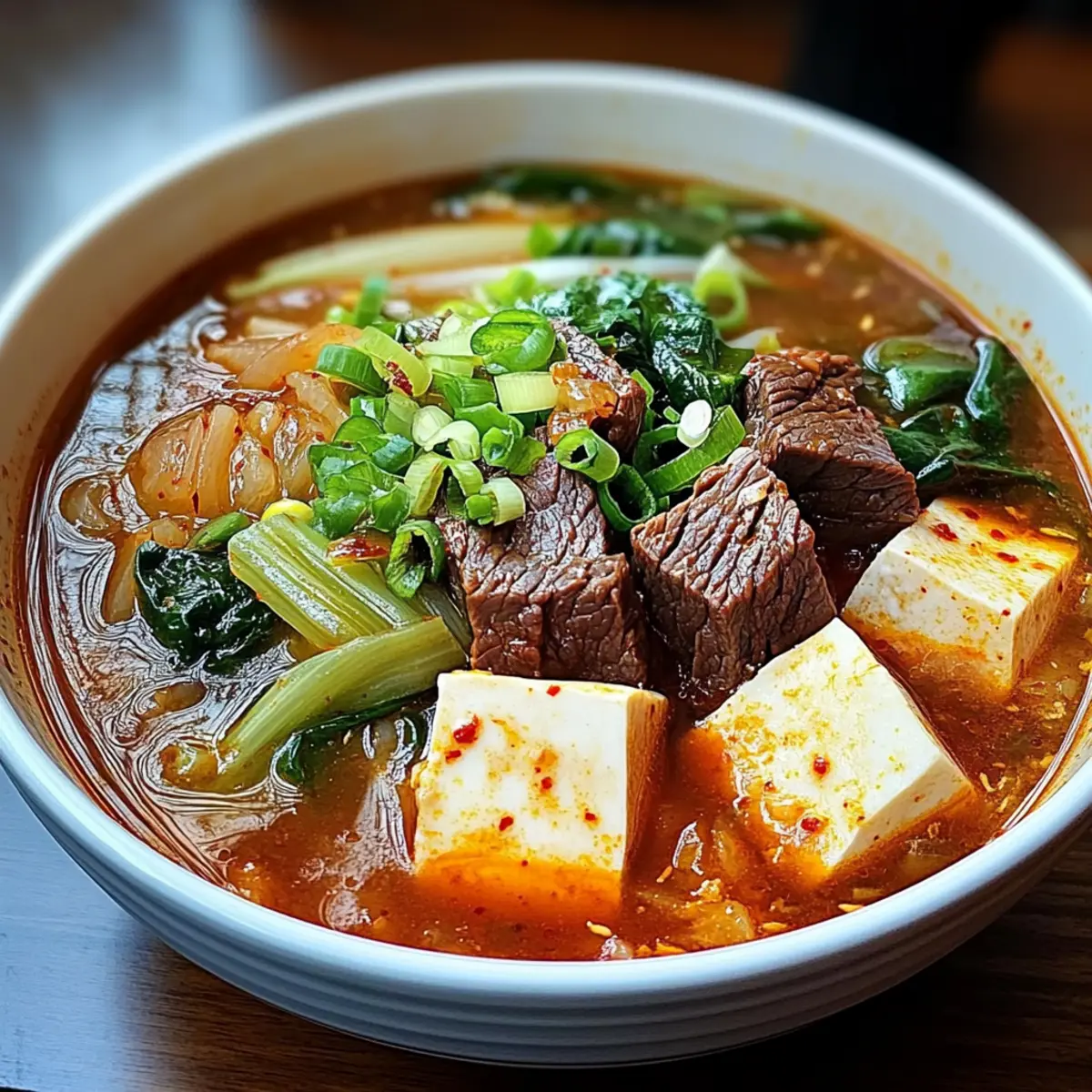
Why is Korean Winter Soup a Must-Try?
Comforting Warmth: This soup envelops you in a cozy embrace, perfect for chilly winter evenings.
Bold Flavors: The fiery gochujang and smoky gochugaru dance on your palate, creating an unforgettable taste experience.
Quick and Easy: With only 20 minutes of prep time, you can have a hearty meal on the table without fuss.
Versatile Options: Whether meat lover or plant-based eater, the recipe offers easy substitutions to cater to everyone’s taste. For a delightful vegetarian twist, check out our Winter Vegetable Quiche.
Nourishing Ingredients: With tender beef brisket, creamy tofu, and vibrant veggies, each serving packs a flavorful punch. You’re not just eating; you’re enjoying a nutrient-rich bowl of comfort!
Korean Winter Soup Ingredients
• Here’s everything you need to make a delicious Korean Winter Soup.
For the Soup Base
• Beef Brisket – Provides a rich, meaty backbone and melds enriching flavors into the broth. Ensure the brisket is cut into 2-inch pieces for even cooking.
• Water – Serves as the base for the soup, allowing flavors to meld. Essential for achieving a clear broth.
• Soy Sauce – Adds umami and salty depth without overpowering other flavors. Can be substituted with tamari for a gluten-free option.
• Gochujang (Korean Red Pepper Paste) – Gives the soup its signature heat and complexity. Use less for a milder version.
• Gochugaru (Korean Red Pepper Powder) – Provides bright, smoky spice that complements the gochujang. Adjust to taste for spice levels.
• Garlic – Infuses the broth with aromatic depth. Minced for optimal dispersion throughout the soup.
For the Vegetables
• Onion – Adds natural sweetness and slight thickness to the broth while cooking down. Use yellow or sweet onion for best results.
• Napa Cabbage – Soft and mild, absorbs the broth and adds tender texture. Regular cabbage can be used as a substitute.
• Daikon Radish – Introduces a slightly spicy crunch that softens during cooking. Substitute with regular radish if necessary.
For the Creaminess
• Firm Tofu – Offers creaminess and protein contrast. Silken tofu can be used, but results in a different texture.
For Enhanced Flavor
• Sesame Oil – Delivers nutty warmth to the final dish. Can use extra virgin olive oil for a different flavor.
• Green Onions – Adds fresh flavor and a sharp bite when sautéed and stirred in. Shallots can serve as an alternative if green onions are unavailable.
• Salt and Pepper – Essential for seasoning to taste. Adjust according to personal preference.
To Serve
• Cooked White Rice – Serves on the side to balance the soup’s heat. Consider serving with kimchi for added flavor contrast.
Step‑by‑Step Instructions for Korean Winter Soup
Step 1: Prepare the Broth
In a large pot, combine the beef brisket with enough water to cover it, typically about 8 cups. Bring the mixture to a rolling boil over high heat, then reduce the temperature to maintain a gentle simmer. Cover the pot and let it cook for approximately 30 minutes until the brisket is fork-tender and the broth begins to develop its rich flavor.
Step 2: Skim the Surface
While the broth simmers, use a ladle or spoon to skim off any impurities or foam that form on the surface. This step is crucial to ensure you have a clear and vibrant broth for your Korean Winter Soup. Continue skimming for about 5 minutes, then discard any impurities, maintaining a visually appealing base.
Step 3: Enhance with Seasonings
Once the brisket is tender, add the soy sauce, gochujang, gochugaru, and minced garlic to the pot. Stir the mixture well to ensure the flavors combine beautifully. Allow the soup to simmer for another 5 minutes, during which the aromas will fill your kitchen with a delightful fragrance.
Step 4: Add the Vegetables and Tofu
Incorporate the chopped onion, napa cabbage, firm tofu, and daikon radish into the pot. Stir gently to mix the ingredients and immerse them in the flavorful broth. Cover the pot again and continue to simmer for an additional 20 minutes, allowing the vegetables to soften and absorb the delicious seasoning.
Step 5: Sauté Green Onions
While the soup is simmering, heat sesame oil in a separate pan over medium heat until fragrant. Add the chopped green onions and sauté them for about 2 minutes, releasing their fresh aroma. This enhances the final flavor of your Korean Winter Soup. Once ready, transfer the sautéed green onions to the simmering pot.
Step 6: Final Seasoning Touch
Taste the broth after adding the green onions and adjust the flavor with salt and pepper. Make any necessary tweaks for your personal preference, ensuring every spoonful of Korean Winter Soup is just right for you. Simmer for an additional 5 minutes to meld the flavors together perfectly.
Step 7: Serve and Enjoy
Ladle the hot Korean Winter Soup into bowls, making sure to include a generous portion of tender beef, tofu, and vegetables in each serving. Pair the soup with steamed white rice on the side to balance the heat and savor the warmth of this cozy dish together.
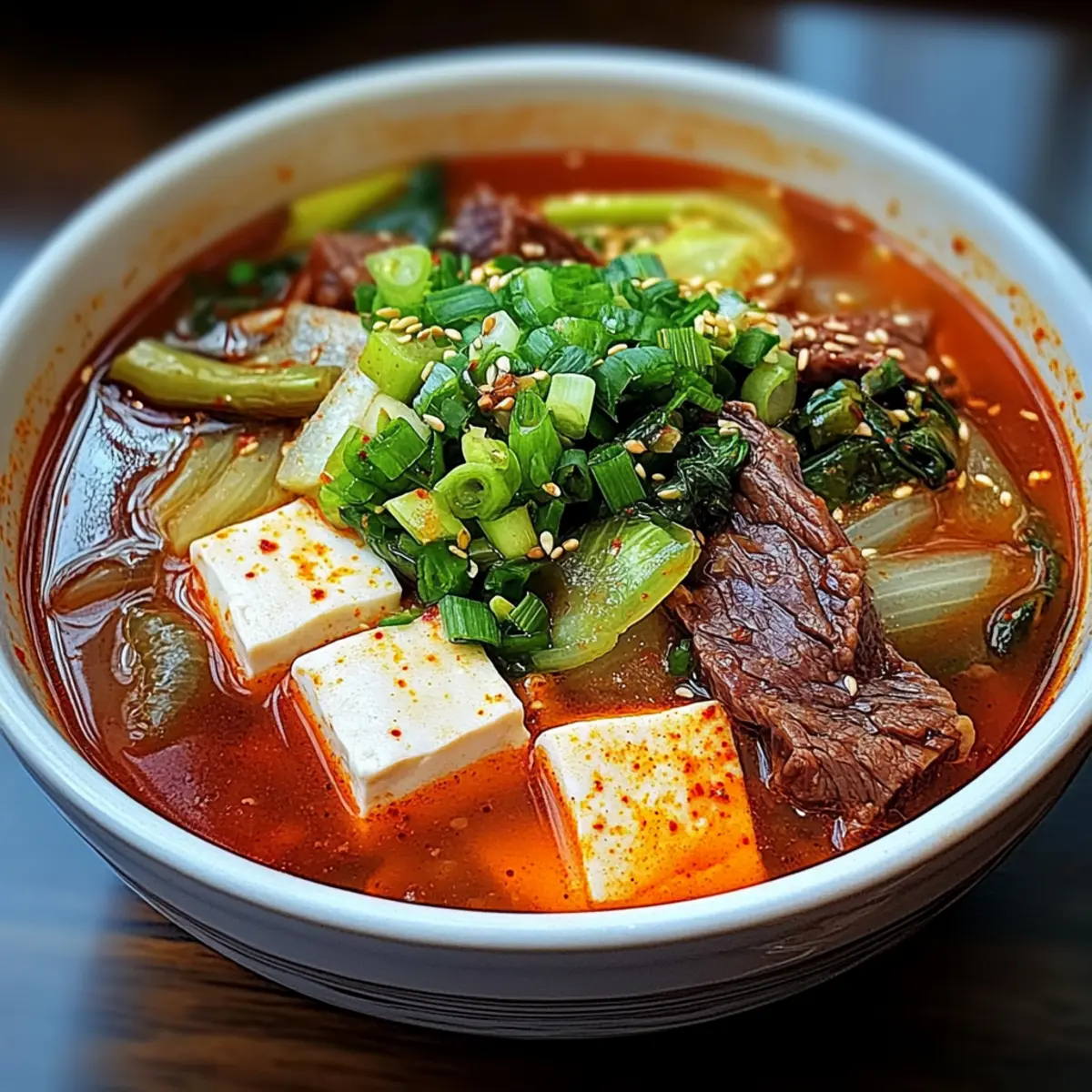
Korean Winter Soup Variations & Substitutions
Customize your Korean Winter Soup for a delightful twist that suits your taste buds and dietary needs!
-
Vegetarian Delight: Swap beef brisket with hearty vegetables like mushrooms, carrots, and more tofu. This version maintains a satisfying richness while providing all the cozy comfort you crave.
-
Vegan Option: Utilize vegetable broth instead of water for a flavorful vegan soup. It harmonizes beautifully with the gochujang and boosts your dish’s depth.
-
Gluten-Free: Substitute soy sauce with tamari to keep the umami flavor while ensuring the soup is gluten-free. Taste the difference with these small adjustments!
-
Extra Spicy: Add jalapeños or a sprinkle of red pepper flakes to amp up the heat. For those who love a fiery sensation, this will certainly awaken your taste buds!
-
Creamy Texture: If you prefer a richer broth, blend a portion of the soup before serving. This thickens the texture, making it feel even more indulgent and luxurious.
-
Herb Infusion: Toss in fresh herbs like cilantro or basil at the end for a fresh and vibrant twist. It adds an aromatic quality that elevates the entire dish.
-
Crunchy Toppings: Top your soup with toasted sesame seeds or crispy garlic for an added crunch. The contrast in texture brings delightful surprises to every spoonful!
-
Serving Suggestions: Enhance your meal by serving it with a side of kimchi or pickled vegetables, which complement the soup’s flavors beautifully. For other delicious side options, you might enjoy pairing this with Chicken Tortilla Soup or warm Lemon Chicken Soup.
Let your creativity shine, and enjoy the journey of making this amazing Korean Winter Soup your very own!
What to Serve with Korean Winter Soup
Warm up a cozy winter night with a delightful spread that pairs beautifully with this flavorful bowl of Korean comfort.
- Steamed White Rice: The perfect accompaniment, it soaks up the rich broth, balancing the soup’s heat in every spoonful.
- Kimchi: This spicy, tangy side dish adds a delightful crunch, enhancing the overall experience and igniting your taste buds.
- Pickled Vegetables: Offer a refreshing contrast, the acidity of pickles cuts through the soup’s richness, bringing harmony to the meal.
- Korean Pancakes (Pajeon): Crispy on the outside and tender on the inside, these savory pancakes are fantastic for dipping into the soup.
- Sesame Spinach Salad: A chilled side of sautéed spinach tossed with sesame oil and garlic provides flavor and a touch of freshness to the meal.
- Soft boiled eggs: When sliced, their creamy yolk enriches the soup, blending beautifully with the dish’s spicy components.
- Soda or Sparkling Water: A light, effervescent drink cleanses the palate between bites, balancing the meal’s robust flavors.
- Banchan: A selection of small side dishes can enhance the experience, providing variety and complementing the robust nature of Korean cuisine.
Expert Tips for Korean Winter Soup
- Choose the Right Beef: Select well-marbled beef brisket for a richer flavor and tender bite—this will enhance your Korean Winter Soup.
- Broth Clarity: Always skim impurities from the surface while simmering. This ensures your broth remains clear and appetizing throughout.
- Adjust Spice Levels: Start with smaller amounts of gochujang and gochugaru. You can always add more for extra heat, but it’s tough to tone it down!
- Vegetable Substitution: If you can’t find napa cabbage, regular cabbage works well. Just chop it into similar-sized pieces to ensure even cooking.
- Final Seasoning Check: Don’t skip tasting the broth before serving. Final tweaks with salt and pepper elevate the flavors of your Korean Winter Soup!
How to Store and Freeze Korean Winter Soup
- Fridge: Store leftovers in an airtight container for up to 3 days. Ensure it’s cooled to room temperature before refrigerating to maintain freshness.
- Freezer: Freeze the soup in individual portions for up to 2 months. Use freezer-safe containers or bags, leaving space for expansion during freezing.
- Reheating: To enjoy your Korean Winter Soup, reheat on the stove over low heat, stirring occasionally, until warmed through. You can also microwave it in short bursts, stirring in between.
- Thawing: For frozen soup, thaw overnight in the fridge or use the microwave’s defrost setting for a quick option before reheating.
Make Ahead Options
These Korean Winter Soup is perfect for meal prep, saving you time on busy nights! You can prepare the broth by cooking the beef brisket and skimming impurities up to 24 hours in advance; simply let it cool and refrigerate. Additionally, chop the vegetables and tofu ahead of time, storing them in an airtight container for up to 3 days. When you’re ready to enjoy the soup, heat the broth, add the prepared ingredients, and simmer for the final 20 minutes to meld all the flavors. This ensures your soup maintains its inviting warmth and rich taste, delivering deliciousness with minimal effort!
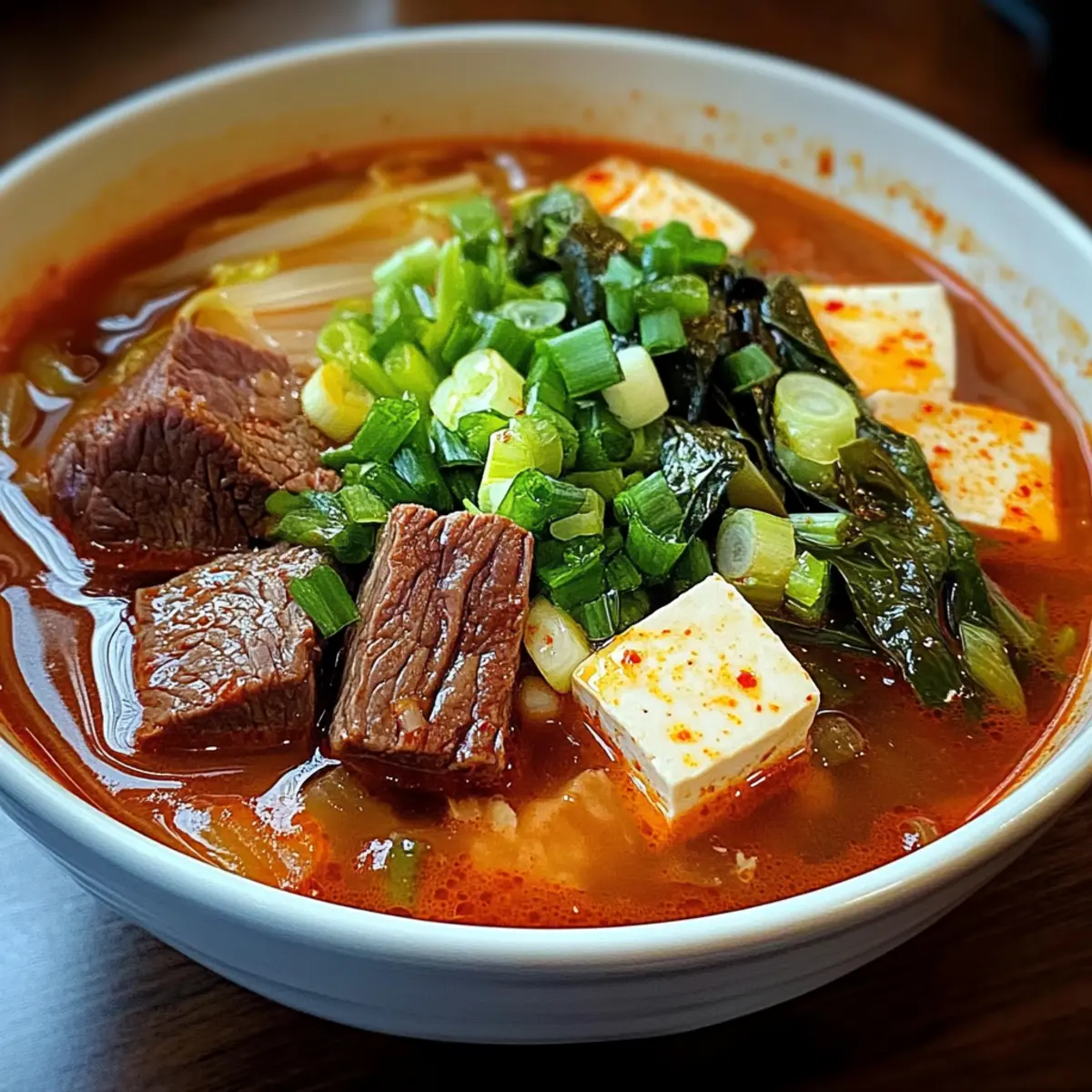
Korean Winter Soup Recipe FAQs
What type of beef is best for Korean Winter Soup?
Absolutely! For the best flavor and tenderness, choose well-marbled beef brisket. This cut contains enough fat to enrich the broth and makes for melt-in-your-mouth pieces as you savor each spoonful.
How should I store leftovers of the Korean Winter Soup?
Store your delicious leftovers in an airtight container in the refrigerator for up to 3 days. It’s essential to let the soup cool down to room temperature before sealing to maintain its freshness and prevent condensation inside the container.
Can I freeze Korean Winter Soup?
Very! You can freeze your Korean Winter Soup in individual portions for up to 2 months. Just place it in freezer-safe containers or bags, leaving some space for it to expand as it freezes. To reheat, simply thaw overnight in the fridge or use the microwave’s defrost setting.
What should I do if my soup turns out too spicy?
If your soup feels a bit too fiery, you can balance it out by adding a dollop of sugar or honey to tone down the heat. Another great option is to add more liquid (like broth or water) and additional vegetables or tofu to dilute the spice while enriching the flavor.
Can I make Korean Winter Soup vegetarian or vegan?
Absolutely! To create a vegetarian or vegan version, simply replace the beef brisket with hearty vegetables such as mushrooms, carrots, or additional tofu. Use vegetable broth instead of water for a deep, satisfying flavor that everyone can enjoy!
Are there any dietary considerations for allergies?
Definitely! If you or your friends have allergies, be cautious with ingredients like soy sauce; you can use tamari to keep it gluten-free. Always check for allergens, especially in gochujang and gochugaru, as they can vary by brand. Make substitutions according to dietary needs, so everyone can indulge without worry!
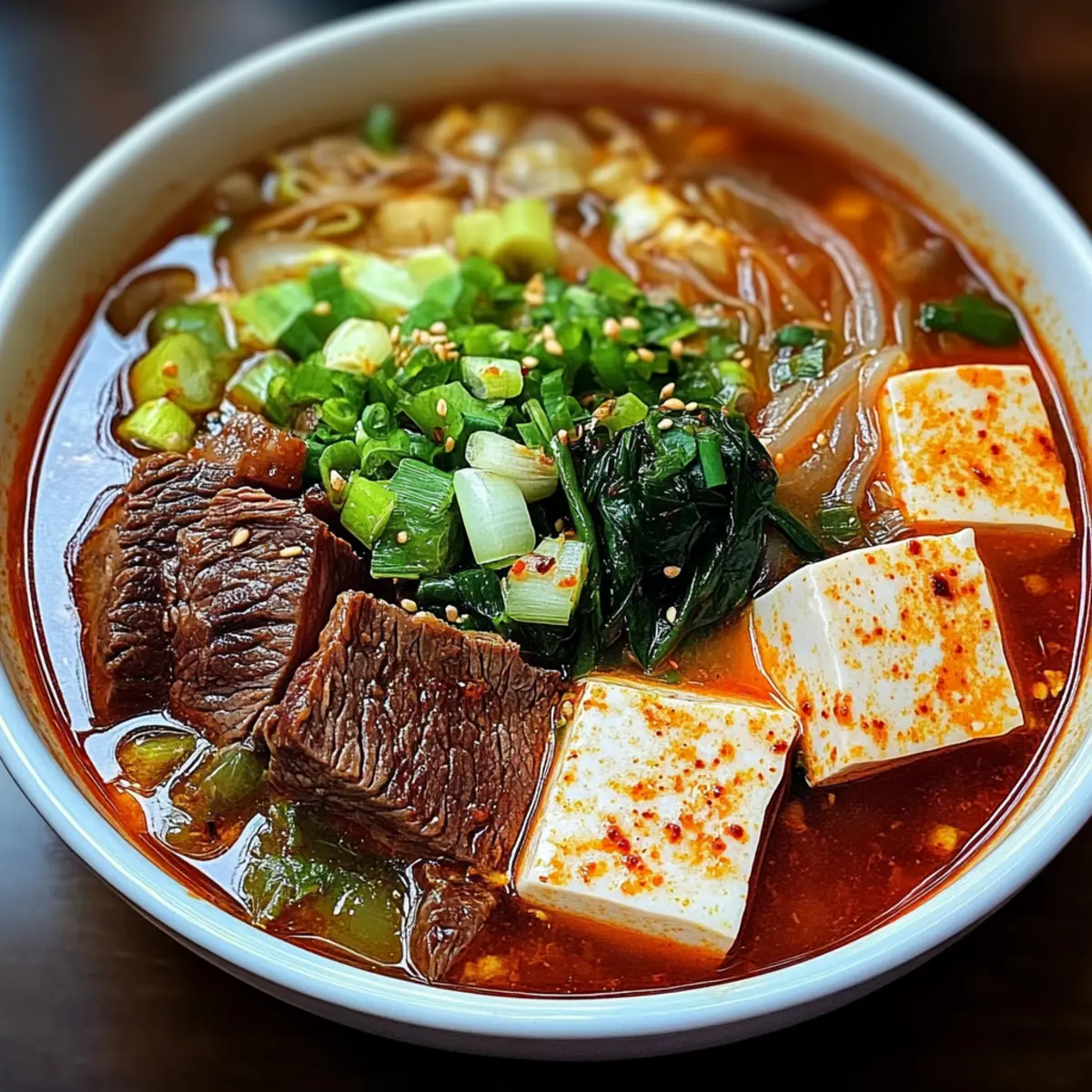
Korean Winter Soup: Embrace Cozy Comfort in Every Spoonful
Ingredients
Equipment
Method
- Prepare the Broth: In a large pot, combine the beef brisket with enough water to cover it. Bring to a boil, then simmer for approximately 30 minutes until tender.
- Skim the Surface: Use a ladle to skim off impurities or foam that form on the surface for a clear broth.
- Enhance with Seasonings: Add soy sauce, gochujang, gochugaru, and garlic to the pot. Stir and simmer for another 5 minutes.
- Add the Vegetables and Tofu: Incorporate chopped onion, napa cabbage, tofu, and daikon radish. Simmer for an additional 20 minutes.
- Sauté Green Onions: Heat sesame oil in a separate pan, sauté green onions for 2 minutes, then add to the pot.
- Final Seasoning Touch: Taste the broth and adjust with salt and pepper. Simmer for 5 more minutes.
- Serve and Enjoy: Ladle the soup into bowls with beef, tofu, and vegetables. Serve with rice.
Leave a Reply