
As I stirred the sizzling vegetables in my pan, the aromatic scents of sesame and garlic filled my kitchen, creating a hug around my heart. That’s when I knew it was time to whip up a batch of Japchae—those delightful Korean stir-fried sweet potato noodles that have made their way into my favorite recipe repertoire. This dish isn’t just a feast for the senses; it’s incredibly customizable too, allowing you to tailor it to your taste with your choice of protein, be it hearty beef, tender chicken, or savory tofu. Plus, it’s gluten-free when using sweet potato noodles, making it a friendly option for all your loved ones. Whether you’re hosting a cozy gathering or just in need of a comforting meal at home, Japchae delivers. What protein or spice do you think would make your ideal bowl of these magical noodles?
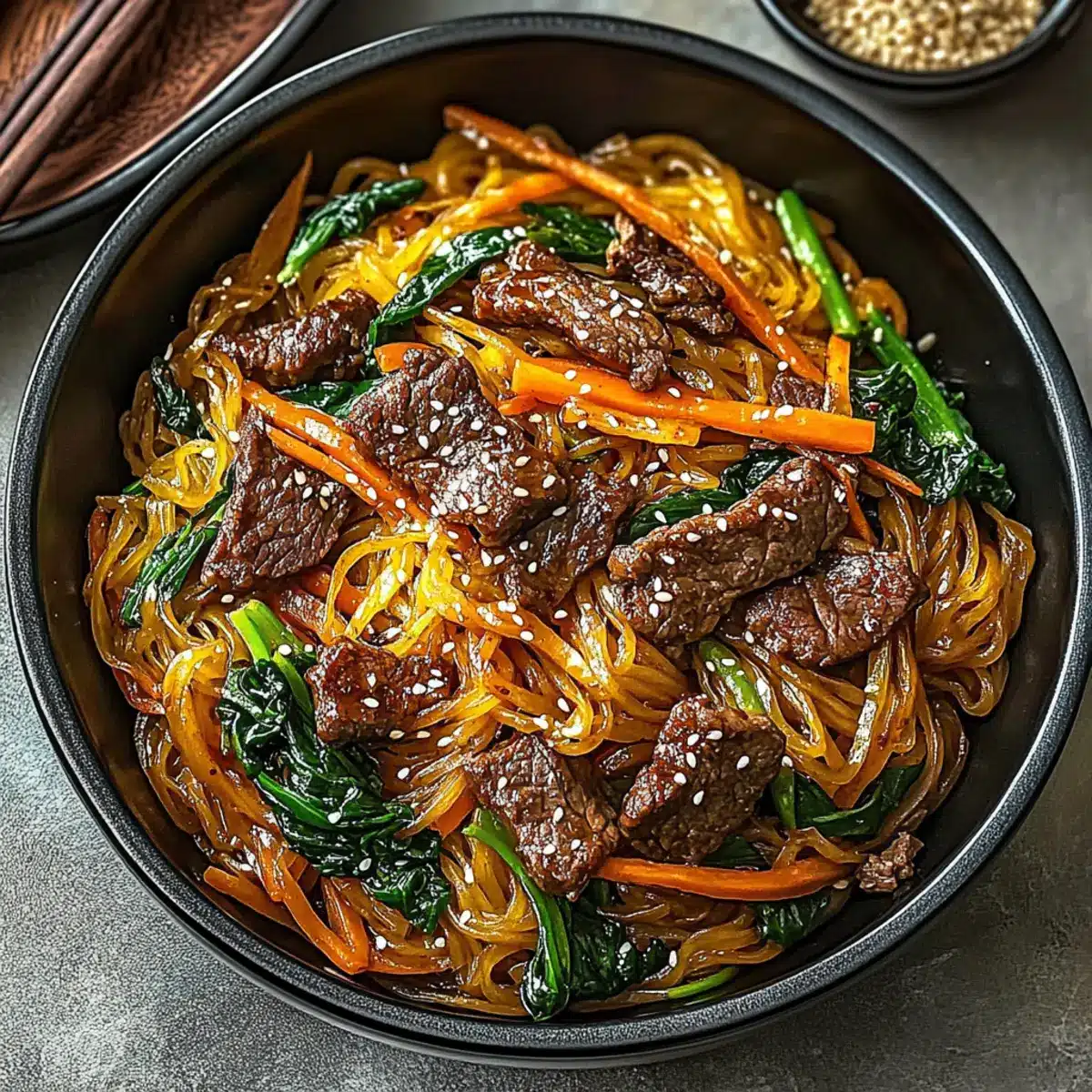
Why is Japchae so beloved?
Customization at Its Finest: With options for beef, chicken, or tofu, Japchae lets you craft the perfect meal. Mix and match proteins or add a spicy kick with gochujang for a delightful twist.
Nutritious and Delicious: Sweet potato glass noodles are not just gluten-free; they add a unique chewy texture, elevating each bite. Plus, vibrant veggies packed within this dish make it a winning choice for health-conscious foodies.
Quick and Simple: You’ll have this stunning dish on the table in under 30 minutes, perfect for busy nights or impromptu gatherings. It’s a crowd-pleaser that brings everyone together, making mealtime a special occasion.
A Celebration of Flavor: Aromas of garlic and sesame waft through your home while cooking, setting the stage for a warm, inviting atmosphere. This dish not only nourishes but also creates memories.
Make-Ahead Magic: Prepare Japchae in advance and store it in the fridge for up to three days—it’s incredibly easy to reheat, maintaining its delightful texture. For more tips on nutritious meal prep, explore our guide on meal prepping.
Japchae Ingredients
For the Noodles
- Sweet Potato Glass Noodles – Essential for that unique chewy texture; you can substitute with rice noodles for a gluten-free option.
For the Protein
- Beef – Adds a rich flavor, but feel free to swap in chicken or tofu for your preferred protein.
For the Vegetables
- Carrots – Introduce natural sweetness; make sure to julienne or slice thinly for even cooking.
- Spinach – A vibrant addition packed with nutrition; kale can be used as a fantastic substitute if needed.
- Onion – Enhances the dish’s flavor with its sweetness when cooked; opt for yellow or white onions for best results.
- Green Onions – Great for a fresh garnish; can use chives if preferred.
For the Sauce
- Soy Sauce – Contributes umami depth; tamari or coconut aminos work as gluten-free alternatives.
- Sesame Oil – Infuses the dish with a delightful nutty aroma; choose regular or toasted for extra flavor.
- Garlic – An essential for that aromatic kick; fresh is best, though powdered garlic can suffice if needed.
Step‑by‑Step Instructions for Japchae
Step 1: Prepare the Noodles
Begin by soaking 8 ounces of sweet potato glass noodles in a bowl of hot water for about 30 minutes, or until they become soft and chewy. Once softened, drain the noodles and set them aside. Make sure the noodles are not overcooked, as they should retain their chewy texture when stir-fried in the Japchae.
Step 2: Cook the Vegetables
In a large skillet or wok, heat 2 tablespoons of sesame oil over medium-high heat. Once hot, add 1 sliced onion, 1 julienned carrot, and 2 cups of fresh spinach. Stir-fry the vegetables for 5-7 minutes until they are vibrant and tender. The onions should turn translucent and the spinach wilted, creating a colorful base for your Japchae.
Step 3: Cook the Protein
Add 8 ounces of sliced beef (or chicken/tofu) to the skillet with the vegetables, and sauté for another 5-6 minutes. Ensure the protein is fully cooked and browned through, reaching an internal temperature of 165°F. Mixing the protein with the vegetables enhances the flavor, setting the stage for the iconic taste of Japchae.
Step 4: Combine Ingredients
Once the protein is cooked, add the drained sweet potato noodles to the skillet along with 1/4 cup of soy sauce. Toss all the ingredients together gently, ensuring the noodles are evenly coated in the sauce. Cook for an additional 3-4 minutes, stirring continuously, until everything is heated through and the noodles are infused with the flavors.
Step 5: Finish & Serve
As a final touch, taste and adjust the seasoning of your Japchae, adding more soy sauce if desired. Garnish with chopped green onions for a fresh finish, and serve warm. The dish should glisten subtly from the sesame oil, and you’ll enjoy the delightful combination of chewy noodles and tender vegetables.
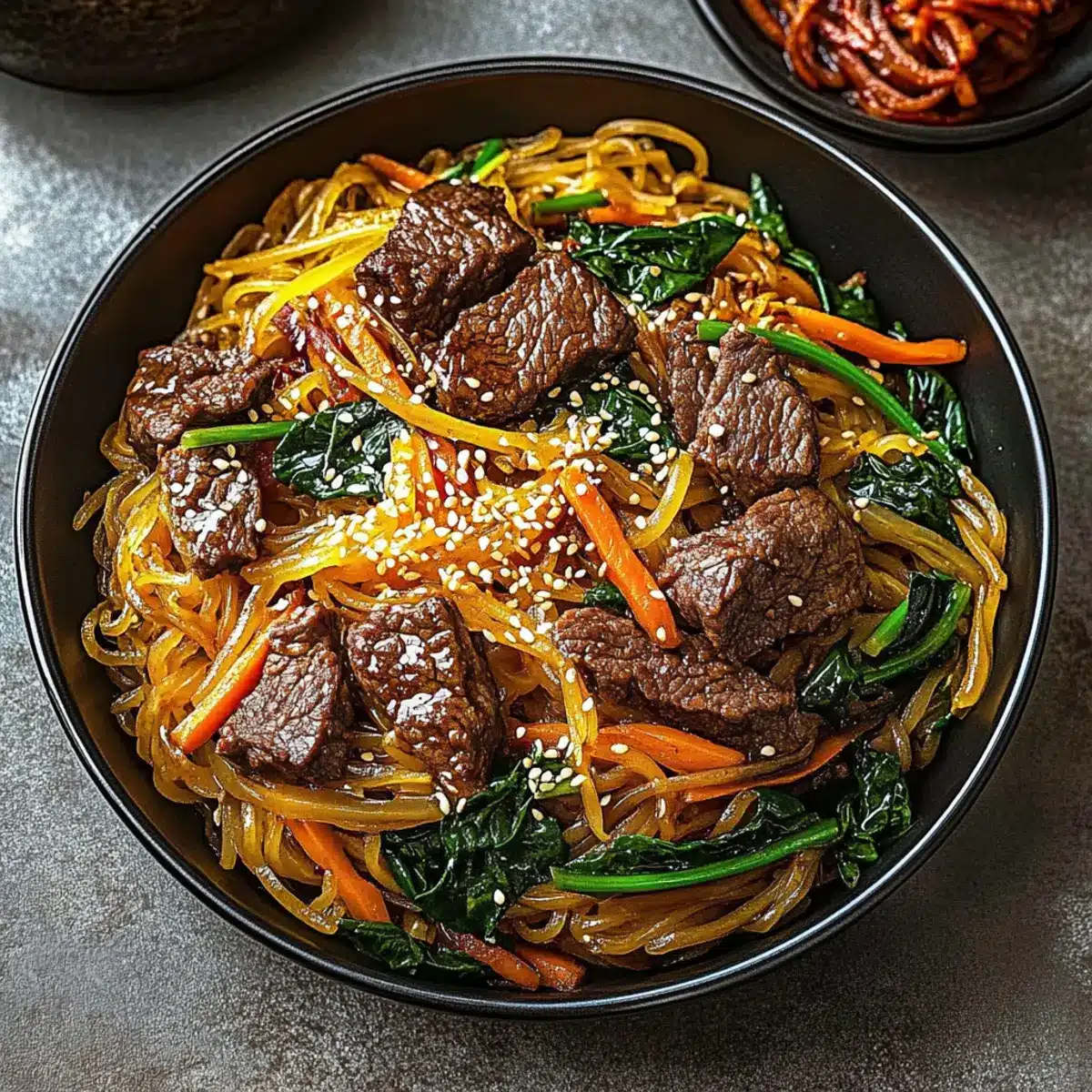
Expert Tips for Perfect Japchae
-
Don’t Overcook Noodles: Ensure sweet potato noodles remain chewy by not soaking them longer than 30 minutes; they should be softened, not mushy.
-
Marinate for Flavor: Allowing your beef (or other proteins) to marinate briefly in soy sauce can deepen the umami flavor, enhancing the overall dish.
-
Use High Heat: Stir-fry your vegetables on medium-high heat for that perfect tender-crisp texture, avoiding sogginess in your Japchae.
-
Even Veggie Cuts: Cut vegetables uniformly to ensure even cooking; this aids in texture and makes each bite enjoyable.
-
Skillet Choice: Opt for a non-stick skillet or well-seasoned wok to prevent sticking, ensuring your Japchae comes out beautifully without tearing the delicate noodles.
-
Garnish Smartly: Fresh green onions add visual appeal and a gentle crunch; sprinkle them right before serving for the best flavor impact.
How to Store and Freeze Japchae
Fridge: Store leftover Japchae in an airtight container in the fridge for up to 3 days. Reheat in a skillet with a splash of water or oil to restore the noodles’ chewiness.
Freezer: For longer storage, freeze the Japchae in a freezer-safe container for up to 2 months. Thaw overnight in the fridge before reheating.
Reheating: To reheat frozen or refrigerated Japchae, place it in a skillet over medium heat, adding a little water or oil to help revive the texture. Stir continuously until heated through.
Portioning: Consider freezing portions of Japchae for quick meals. Just defrost individual servings as needed for an easy and delicious dinner option.
Make Ahead Options
Preparing Japchae in advance is a fantastic way to save time during hectic weeknights! You can slice the vegetables and marinate your protein (beef, chicken, or tofu) up to 24 hours beforehand to enhance their flavors, while the sweet potato noodles can be cooked and kept refrigerated for up to 3 days. Simply soak the noodles and store them in an airtight container to maintain their chewy texture. When you’re ready to enjoy your dish, stir-fry the marinated ingredients, add the noodles, and toss everything with soy sauce for a quick finish. This way, you’ll have a delicious, homemade meal ready in no time, just as delightful as if you made it fresh!
What to Serve with Savory Japchae?
Elevate your meal experience with delightful pairings that complement the savory flavors of Japonese noodles.
-
Crispy Korean Fried Chicken: Juicy and crunchy, this dish’s bold flavors create a perfect contrast to the soft texture of Japchae.
-
Tangy Cucumber Salad: Light and refreshing, the coolness of this salad helps cleanse the palate, balancing the savory richness of Japchae beautifully.
-
Steamed Rice: The neutral flavor of steamed rice acts as a comforting base, allowing the vibrant flavors of Japchae to shine even brighter.
-
Spicy Kimchi: This traditional side adds a fiery kick and probiotic goodness, enhancing the meal with an authentic Korean touch.
-
Sautéed Green Beans: With their crisp texture, these offer an appealing crunch, serving as a healthy complement that rounds out the meal.
-
Miso Soup: Warm and comforting, a bowl of miso soup offers umami depth that enhances the dining experience, elevating Japchae’s deliciousness.
-
Japanese Green Tea: A subtle touch of bitterness from this herbal drink helps balance out the sweetness of the noodles, creating a harmonious pairing.
-
Seasonal Fruit Platter: Fresh fruits provide a refreshing, natural sweetness, serving as a light finish to a delightful meal.
Japchae: Endless Customization Options
Feel free to put your own spin on this delicious dish and create a Japchae that excites your taste buds!
- Dairy-Free: Swap soy sauce with liquid aminos for a dairy-free version while keeping all that rich flavor intact.
- Spicy Twist: Add a tablespoon of gochujang or chili paste for a tantalizing kick that brings heat to your bowl.
- Plant-Based Protein: Substitute beef with marinated tempeh or chickpeas to enjoy a fully plant-based Japchae.
- Veggie Variety: Toss in seasonal vegetables like bell peppers or zucchini to maximize freshness and flavor in your dish.
- Noodle Add-Ons: For an added texture, mix in some sautéed mushrooms or crunchy snow peas to elevate your Japchae experience.
- Nutrient Boost: Incorporate leftover roasted vegetables for a quick and nutritious twist—perfect for using up what’s in your fridge!
- Citrus Zest: Add a hint of lime or lemon juice right before serving to brighten the flavors and give it a fresh finish.
- Sweet Addition: For a hint of sweetness, mix in some steamed sweet corn or sautéed pineapple chunks for a delightful surprise in every bite.
Feel inspired? Dive into your kitchen and experiment with these variations to personalize your Japchae creation! If you’re interested in more ideas about using seasonal produce, check out our guide on making the most of seasonal vegetables.
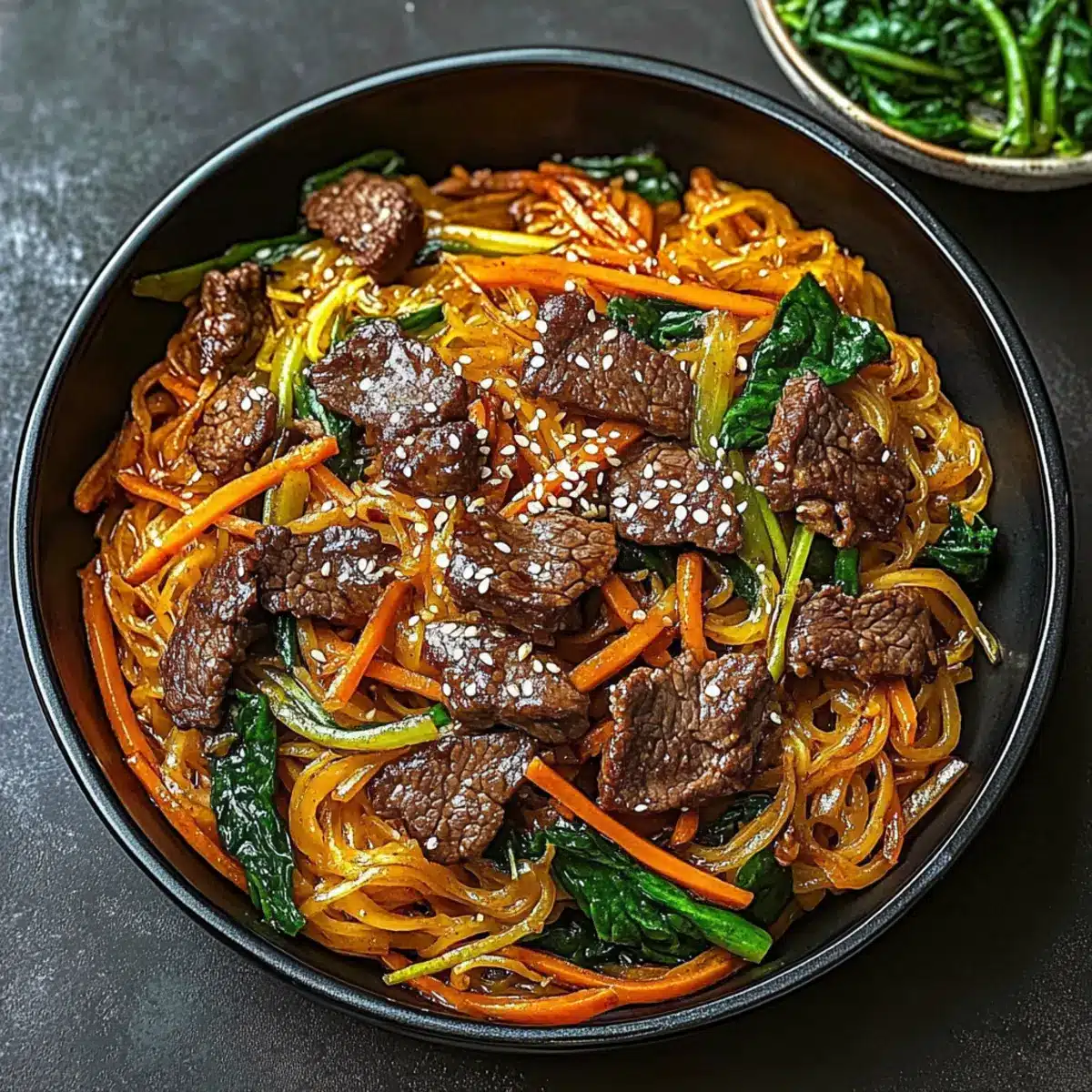
Japchae Recipe FAQs
What type of soup noodles should I use for Japchae?
Sweet potato glass noodles are traditional for Japchae, providing a chewy texture essential to this dish. If you’re looking for a gluten-free option, these noodles are perfect! You can also substitute them with rice noodles if desired, though they will have a different texture.
How long can I store leftover Japchae?
You can store leftover Japchae in an airtight container in the fridge for up to 3 days. When reheating, add a splash of water or oil to the skillet to revive the noodles’ delightful chewiness.
Can I freeze Japchae?
Absolutely! To freeze Japchae, place it in a freezer-safe container, ensuring it’s tightly sealed. It can last in the freezer for up to 2 months. When you’re ready to enjoy it again, thaw overnight in the fridge, then reheat in a skillet over medium heat, adding a little water or oil to bring back its lovely texture.
How can I ensure my noodles don’t become mushy?
To avoid mushy noodles, soak the sweet potato glass noodles for no more than 30 minutes in hot water until they are softened but still chewy. They will further cook in the stir-fry, so maintaining a firm texture during soaking is key!
Is Japchae safe for individuals with gluten allergies?
Yes! When made with sweet potato glass noodles and using gluten-free soy sauce like tamari or coconut aminos, Japchae is a fantastic option for those with gluten allergies. Always double-check the labels of your sauces and ingredients to ensure they meet dietary needs.
Can I use frozen vegetables for Japchae?
Certainly! If you’re short on time, frozen vegetables can be a convenient substitute. Just be sure to cook them thoroughly so they’re tender when combined with the other ingredients in your Japchae. Fresh is always ideal, but frozen veggies can still create a delicious dish.
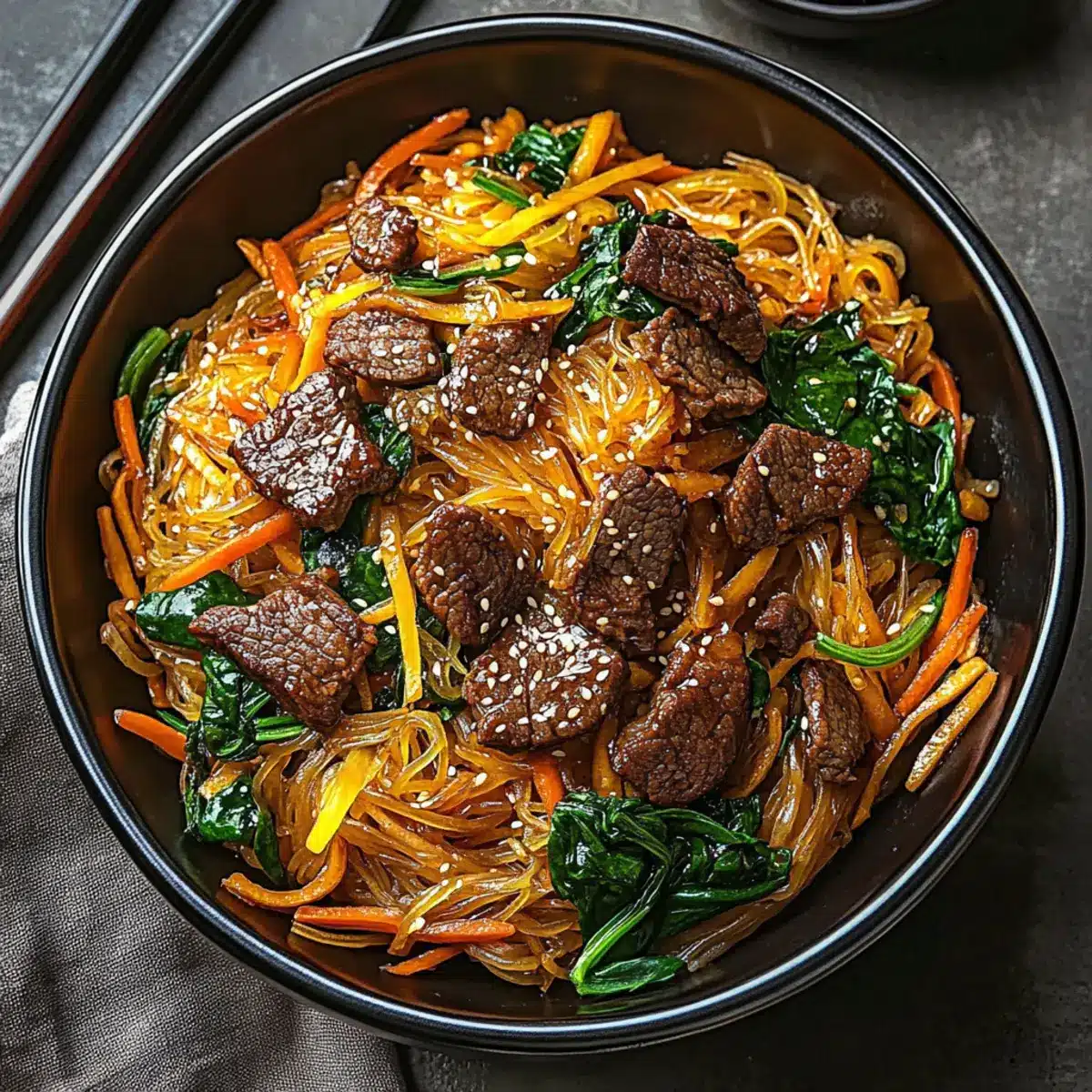
Delicious Japchae: Savory Korean Stir-Fried Noodles to Savor
Ingredients
Equipment
Method
- Soak the sweet potato glass noodles in a bowl of hot water for about 30 minutes, then drain and set aside.
- In a large skillet, heat sesame oil over medium-high heat. Add sliced onion, julienned carrot, and spinach. Stir-fry for 5-7 minutes until vibrant and tender.
- Add sliced beef to the skillet and sauté for another 5-6 minutes until fully cooked.
- Add the drained noodles and soy sauce to the skillet, tossing gently to coat. Cook for an additional 3-4 minutes until heated through.
- Taste and adjust the seasoning. Garnish with chopped green onions and serve warm.
Leave a Reply