
The aroma of simmering pasta sauce can transport you straight to a sun-kissed Italian kitchen. My Authentic Pappardelle Bolognese recipe captures that rustic essence, delivering a comforting, hearty meal that feels like a big, warm hug. With a combination of tender pappardelle and a rich, glossy sauce crafted from slow-simmered ingredients, this dish is your new go-to for cozy weeknight dinners. Not only is it straightforward to prepare, but it also brings people together—perfect for sharing with family or friends. Pair it with crusty bread and a fresh salad, and you’ll have a feast that satisfies both the belly and the soul. Ready to see how this Italian classic can infuse your evenings with joy? Let’s dive in!
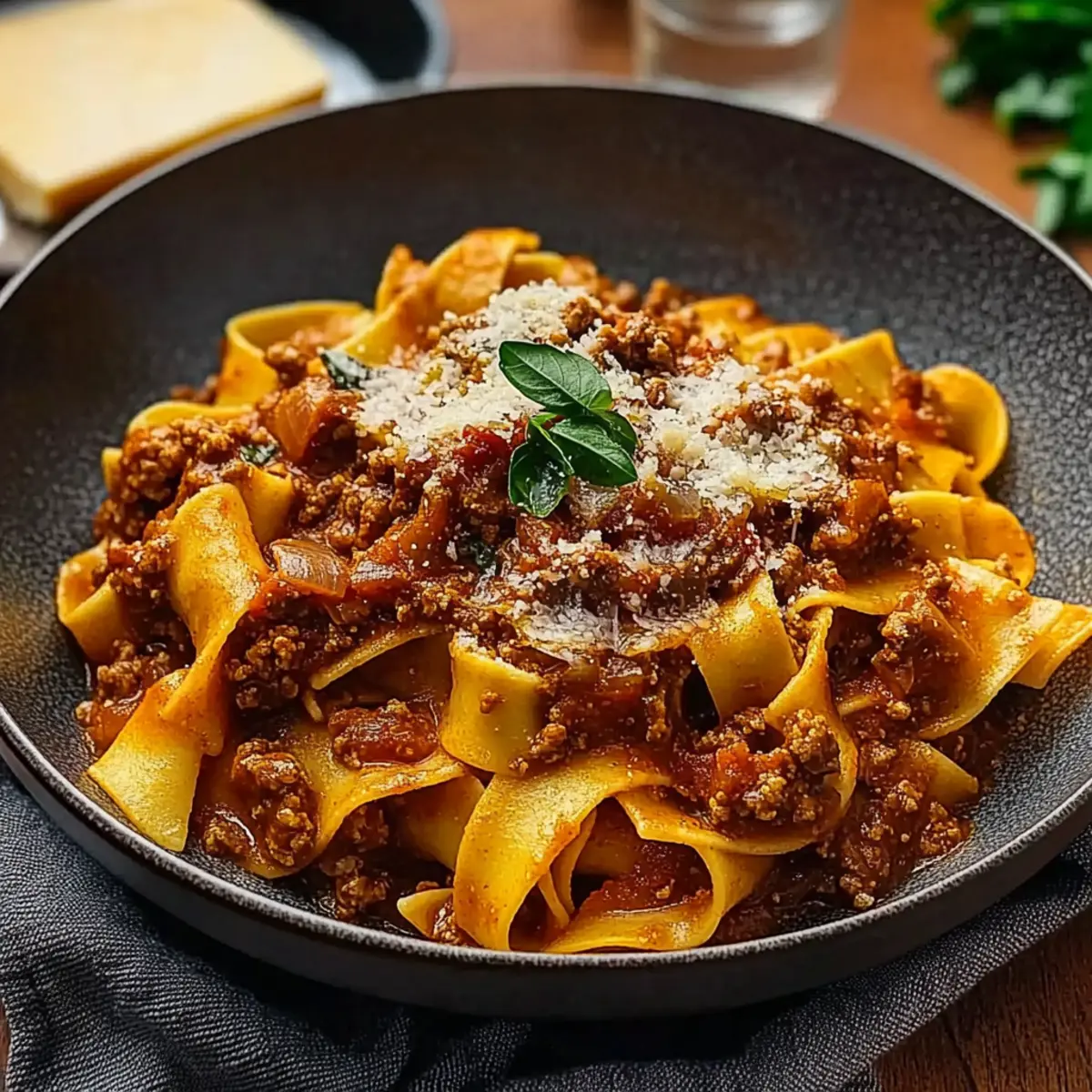
Why is Pappardelle Bolognese so special?
Hearty Comfort: This dish is the ultimate comfort food, creating warmth and satisfaction in every bite. Rich, Flavorful Sauce: The slow-cooked sauce is infused with robust flavors, making it irresistible. Easy Preparation: With easy-to-follow steps, even beginner cooks can master this Italian classic. Crowd-Pleasing Delight: Perfect for family gatherings or cozy dinners, it’s a meal that brings everyone together. Versatile Ingredients: Swap in ground turkey for a leaner option or go gluten-free with different pasta varieties! Try adding a side of garlic bread to elevate your dining experience even more!
Pappardelle Bolognese Ingredients
For the Sauce
• Olive Oil – Cooking fat for sautéing aromatics, adding warmth and flavor.
• Pancetta or Bacon (150 g) – Adds richness and a smoky flavor; can substitute with turkey bacon for a leaner option.
• Onion (1 medium) – Foundation flavor in the soffritto; no substitution recommended.
• Carrot (1) – Natural sweetness and depth in the sauce; no direct substitute, but bell pepper can add color.
• Celery (1 stalk) – Complements the soffritto; can omit if unavailable.
• Garlic Cloves (2, minced) – Adds robust aroma; can use garlic powder in a pinch.
• Ground Beef (500 g) – Main protein; for a lighter sauce, use 80-85% lean beef or ground pork.
• Tomato Paste (2 tbsp) – Deepens tomato flavor; can replace with extra crushed tomatoes if needed.
• Dry Red Wine (1 cup, optional) – Enhances flavor; substitute with beef stock and balsamic vinegar if omitted.
• Crushed Tomatoes or Passata (1 cup) – Creates the sauce base; using canned tomatoes is a great substitute.
• Beef Stock (1 cup) – Adds depth; can use homemade or store-bought.
• Whole Milk (1/2 cup) – Rounds acidity for creaminess; use half cream for a richer sauce or non-dairy milk as a substitute.
• Bay Leaves (2) – Infuses herbal flavor; ensure to remove before serving.
• Salt and Black Pepper – Essential for seasoning; adjust to personal taste.
For the Pasta
• Dried Pappardelle (350-400 g) – Traditional pasta choice; use tagliatelle or gluten-free options if preferred.
For Serving
• Freshly Grated Parmigiano-Reggiano – For serving and a finishing touch; no direct substitute but other hard cheeses can work.
• Chopped Fresh Parsley or Basil – For garnish; optional but adds freshness.
Step‑by‑Step Instructions for Pappardelle Bolognese
Step 1: Sauté the Pancetta
In a large pot, heat a generous splash of olive oil over medium heat. Add 150 grams of diced pancetta or bacon and sauté for about 5 minutes until crispy and golden. The smell will be delightful! This base will add a rich, savory quality to your Pappardelle Bolognese.
Step 2: Cook the Aromatics
Next, introduce one finely chopped medium onion, one diced carrot, and one diced celery stalk to the pot. Cook these ingredients, stirring occasionally, for about 8-10 minutes until they soften and become fragrant. The mixture should look vibrant and colorful, laying the foundation for your hearty sauce.
Step 3: Brown the Beef
Now, stir in 500 grams of ground beef, breaking it apart as it cooks. Allow it to brown for about 5-7 minutes, stirring frequently until fully cooked. You’ll know it’s ready when the meat is no longer pink and has developed a lovely texture. This step is essential for a flavorful Pappardelle Bolognese.
Step 4: Add Tomato Paste and Wine
Once the beef is browned, mix in 2 tablespoons of tomato paste, stirring well to incorporate it. After a minute, pour in 1 cup of dry red wine. Let it simmer for about 2-3 minutes until the wine reduces slightly, enhancing the sauce’s depth. Your kitchen should be filled with a rich aroma at this stage!
Step 5: Combine the Sauce Ingredients
Add 1 cup of crushed tomatoes, 1 cup of beef stock, and 2 bay leaves to the pot. Stir everything together and bring the sauce to a gentle simmer. Allow it to cook uncovered for 1.5 to 2 hours, stirring occasionally. The sauce should thicken beautifully, becoming glossy and rich—a perfect blend for your Pappardelle Bolognese.
Step 6: Incorporate Milk for Creaminess
During the last 15 minutes of cooking, stir in 1/2 cup of whole milk. This step rounds out the acidity and adds creaminess to your sauce. Taste and adjust seasoning with salt and pepper as needed. The sauce will be flavorful and ready to embrace the pasta soon!
Step 7: Cook the Pappardelle
While the sauce simmers, bring a large pot of salted water to a boil. Cook 350-400 grams of dried pappardelle according to the package instructions, usually around 8-10 minutes, until al dente. Drain the pasta, reserving a bit of pasta water to adjust the sauce’s consistency if necessary.
Step 8: Combine Pasta and Sauce
Toss the cooked pappardelle directly into the pot with your rich Bolognese sauce, gently mixing to coat the pasta. If the sauce seems too thick, add a splash of the reserved pasta water to reach your desired consistency. Your cozy meal is almost ready to serve!
Step 9: Serve with Garnishes
Plate the Pappardelle Bolognese in warm bowls and finish with freshly grated Parmigiano-Reggiano and a sprinkle of chopped fresh parsley or basil. The combination of flavors and textures will warm your heart and bring a touch of Italy to your dining table.
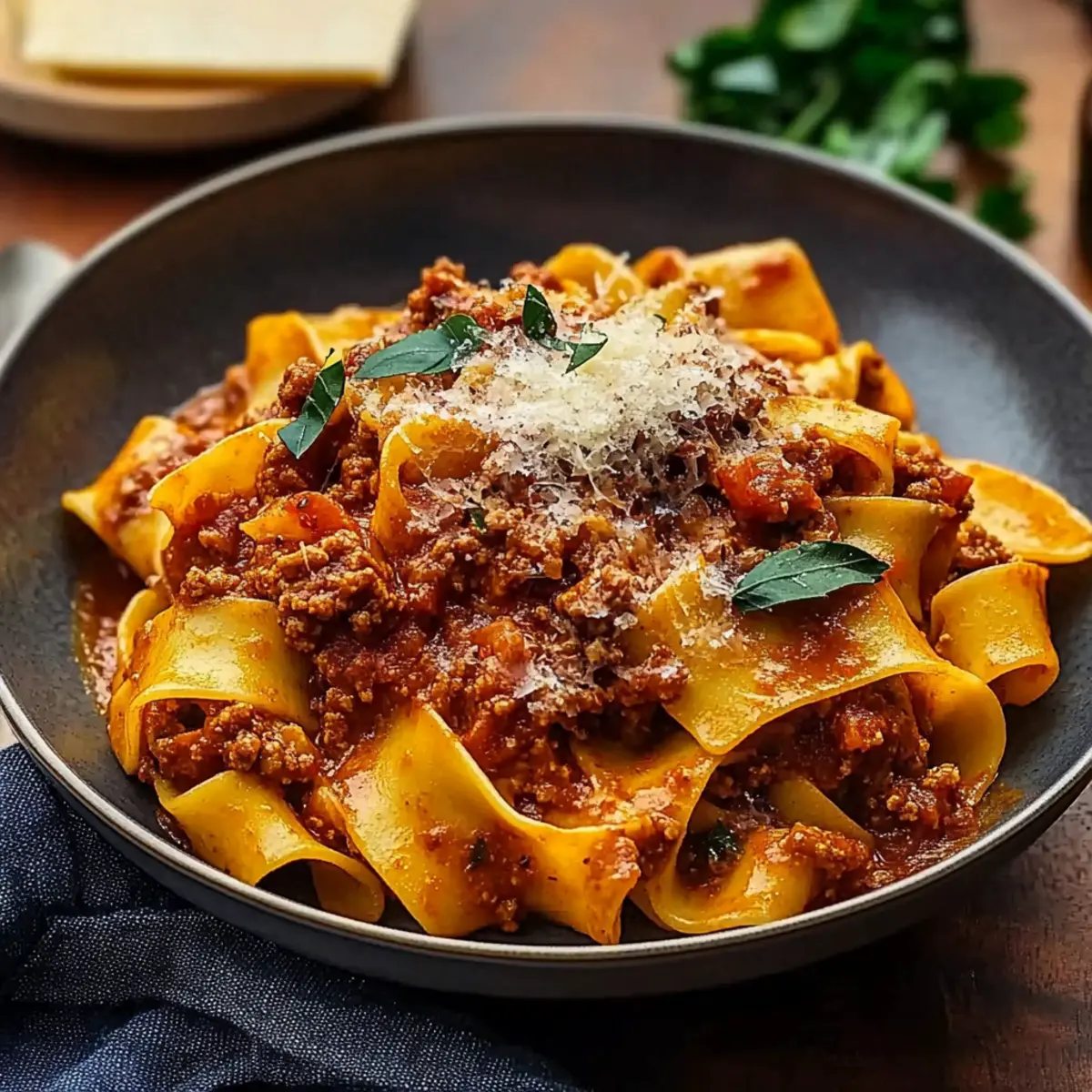
Expert Tips for Pappardelle Bolognese
Simmer Time: Allow the sauce to simmer for 1.5-2 hours for deep, rich flavors. Skipping this step may lead to a less complex taste.
Perfect Pasta Balance: Cook pappardelle just until al dente, as it will continue cooking when combined with the sauce. This ensures a perfect texture.
Creaminess Boost: Stirring in whole milk at the end rounds out the flavors. Avoid adding it too early; it could curdle and impact your sauce.
Essential Seasoning: Always taste and adjust with salt and pepper before serving your Pappardelle Bolognese. Proper seasoning enhances the dish’s overall taste.
Leftover Love: For any leftovers, gently reheat with a splash of beef stock to restore that saucy goodness—a perfect way to enjoy this comforting meal again!
Pappardelle Bolognese Variations & Substitutions
Feel free to put your own spin on this classic dish, crafting a bowl of Pappardelle Bolognese that’s uniquely yours!
-
Lean Option: Replace ground beef with ground turkey or extra-lean beef for a lighter sauce. This keeps the heartiness while reducing calories.
-
Gluten-Free: Swap the dried pappardelle for gluten-free pasta varieties, like rice or chickpea pasta. Still delicious and full of flavor!
-
Spicy Kick: Introduce a pinch of red pepper flakes during the soffritto step for a gentle heat. It adds complexity to the dish without overwhelming the palate.
-
Vegetarian Delight: Use a mix of mushrooms (like cremini or shiitake) instead of meat for a hearty vegetarian version. Add extra herbs for depth, and you won’t miss the meat!
-
Extra Flavor: Incorporate fresh herbs like thyme or rosemary while the sauce simmers. Their aromatic qualities will elevate the richness of the Bolognese.
-
Smoky Twist: Add a drizzle of smoked olive oil as a finishing touch to enhance the dish’s flavor profile. This small change makes a big impact!
-
Creamy Variation: For an extra luxurious twist, replace whole milk with cream or half-and-half in the last step. The sauce will be richer and silkier, perfect for special occasions.
-
Tomato Boost: If you love a more pronounced tomato flavor, add another can of crushed tomatoes or fresh diced tomatoes to the mix. This offers a fresher taste to the sauce.
Embrace these variations to discover how versatile Pappardelle Bolognese can be. Whether you’re adjusting for dietary preferences or simply exploring new flavors, each twist makes for a delightful journey!
What to Serve with Authentic Pappardelle Bolognese
Complementing your homemade pasta with delightful sides can create an unforgettable dining experience. Here’s how to elevate your meal!
-
Garlic Bread: The crispy, buttery texture of garlic bread pairs beautifully with the rich Bolognese sauce, perfect for soaking up leftover juices.
-
Arugula Salad: A fresh arugula salad dressed in lemon vinaigrette adds a zesty contrast, balancing the dish’s heavy flavors beautifully.
-
Roasted Vegetables: Sweet, caramelized roasted veggies like zucchini and bell peppers provide a colorful, nutritious side that enhances the meal while adding brightness.
-
Red Wine: A glass of Chianti or any full-bodied red wine complements the hearty flavors of Pappardelle Bolognese, bringing a touch of Italian dining to your table.
-
Parmesan Crisps: These crunchy bites are a delightful contrast to the pasta’s texture, offering a savory crunch that enhances the overall experience.
-
Tiramisu: For dessert, indulge in a classic tiramisu, its coffee and cocoa flavors creating a perfect sweet finish after the hearty main course.
A well-chosen side or drink can transform your dining into a warm, joyous occasion, echoing the feelings of sharing delicious homemade food with loved ones.
Make Ahead Options
These Authentic Pappardelle Bolognese are perfect for meal prep enthusiasts! You can prepare the sauce up to 3 days in advance, storing it in an airtight container in the refrigerator to maintain its rich flavors. Simply follow the initial steps of cooking the pancetta, aromatics, and ground beef, then mix in the remaining ingredients and let it simmer. When you’re ready to serve, just reheat the sauce on the stovetop, adding a splash of beef stock if it thickens. Cook the pappardelle fresh while the sauce warms, ensuring a delightful, restaurant-quality meal with minimal effort on busy weeknights!
Storage Tips for Pappardelle Bolognese
Fridge: Store leftovers in an airtight container for up to 3 days. Allow the sauce to cool before sealing to keep it fresh and delicious.
Freezer: Pappardelle Bolognese can be frozen for up to 3 months. Portion it into freezer-safe bags or containers, and be sure to label them with the date.
Reheating: When ready to enjoy, gently reheat on the stovetop over low heat. Add a splash of beef stock or water to restore creaminess and prevent the sauce from becoming too thick.
Airtight Storage: Make sure to use airtight containers for freezing. This helps maintain the flavor and prevents freezer burn, keeping your Pappardelle Bolognese tasting fresh and delightful!
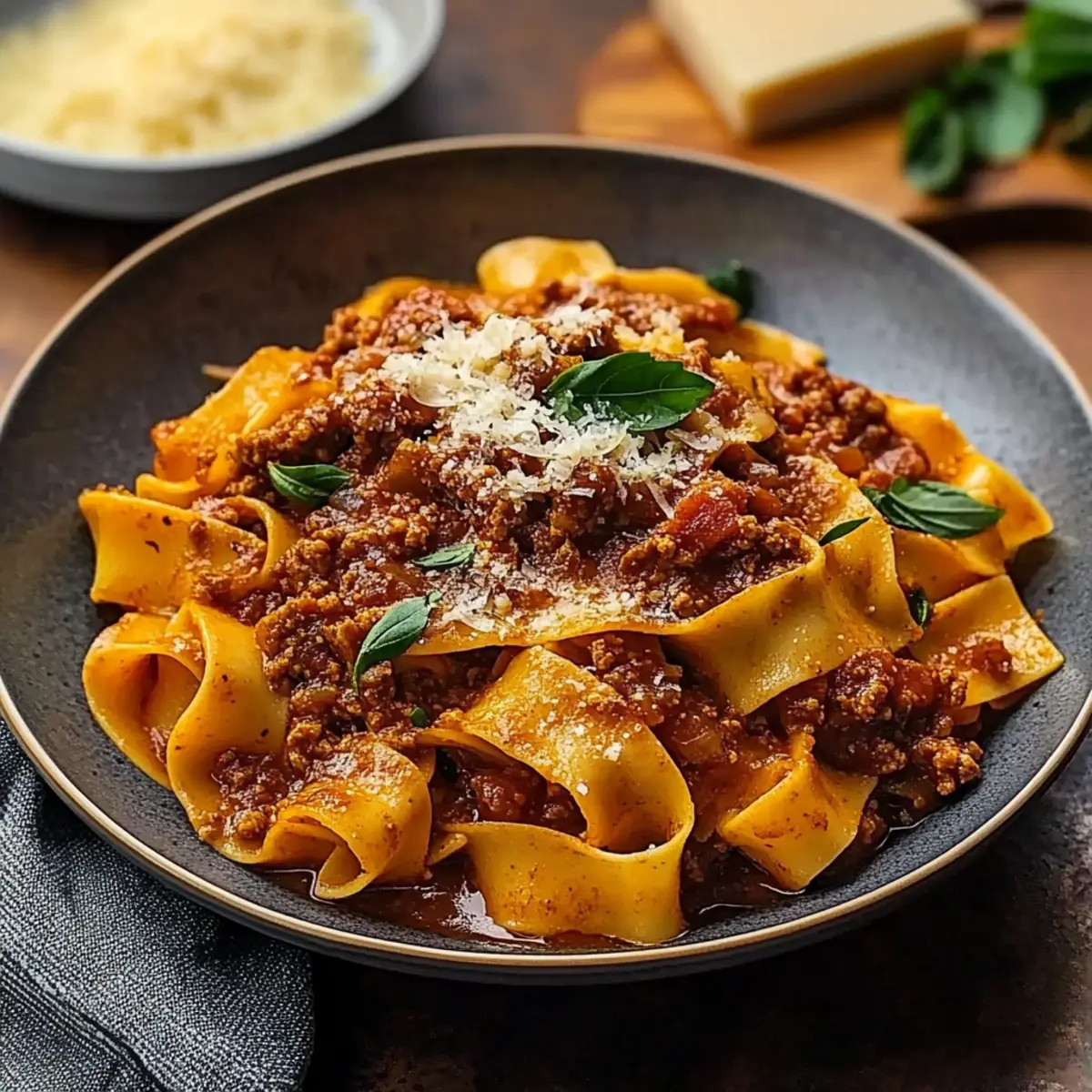
Pappardelle Bolognese Recipe FAQs
How do I choose ripe tomatoes for Pappardelle Bolognese?
Absolutely! When selecting tomatoes, look for ones that are firm, with no dark spots. They should be vibrant in color and give slightly to touch, indicating ripeness. Tomatoes should also have a sweet aroma—this means they’re bursting with flavor, essential for your sauce!
What is the best way to store leftovers?
Leftover Pappardelle Bolognese can be stored in an airtight container in the fridge for up to 3 days. Allow the sauce to cool fully before sealing to preserve its deliciousness. For longer storage, consider freezing it for up to 3 months; just be sure to label your containers with the date so you can enjoy it again!
Can I freeze Pappardelle Bolognese? If so, how?
Yes, you can certainly freeze Pappardelle Bolognese! To do this, let the dish cool to room temperature, then portion it into airtight freezer-safe bags or containers. Remember to squeeze out as much air as possible to prevent freezer burn. When ready to eat, thaw it in the fridge overnight and gently reheat on the stove, adding a splash of beef stock or water to regain that creamy texture.
What if my sauce turns out too thick?
Very good question! If your Bolognese sauce is thicker than you’d like, you can easily adjust it. Add a bit of reserved pasta water (about a tablespoon at a time) while gently stirring over low heat until it reaches your desired consistency. If it’s still too thick, you can also add a splash of beef stock or even a little more milk for that rich, comforting texture.
Are there any dietary considerations for this recipe?
Certainly! This Pappardelle Bolognese contains beef and dairy, so if you’re cooking for individuals with allergies, be mindful of replacing items like whole milk with a non-dairy alternative, such as almond milk, and using ground turkey or lentils instead of beef for a lighter option. Always check labels for allergens if using pre-packaged ingredients.
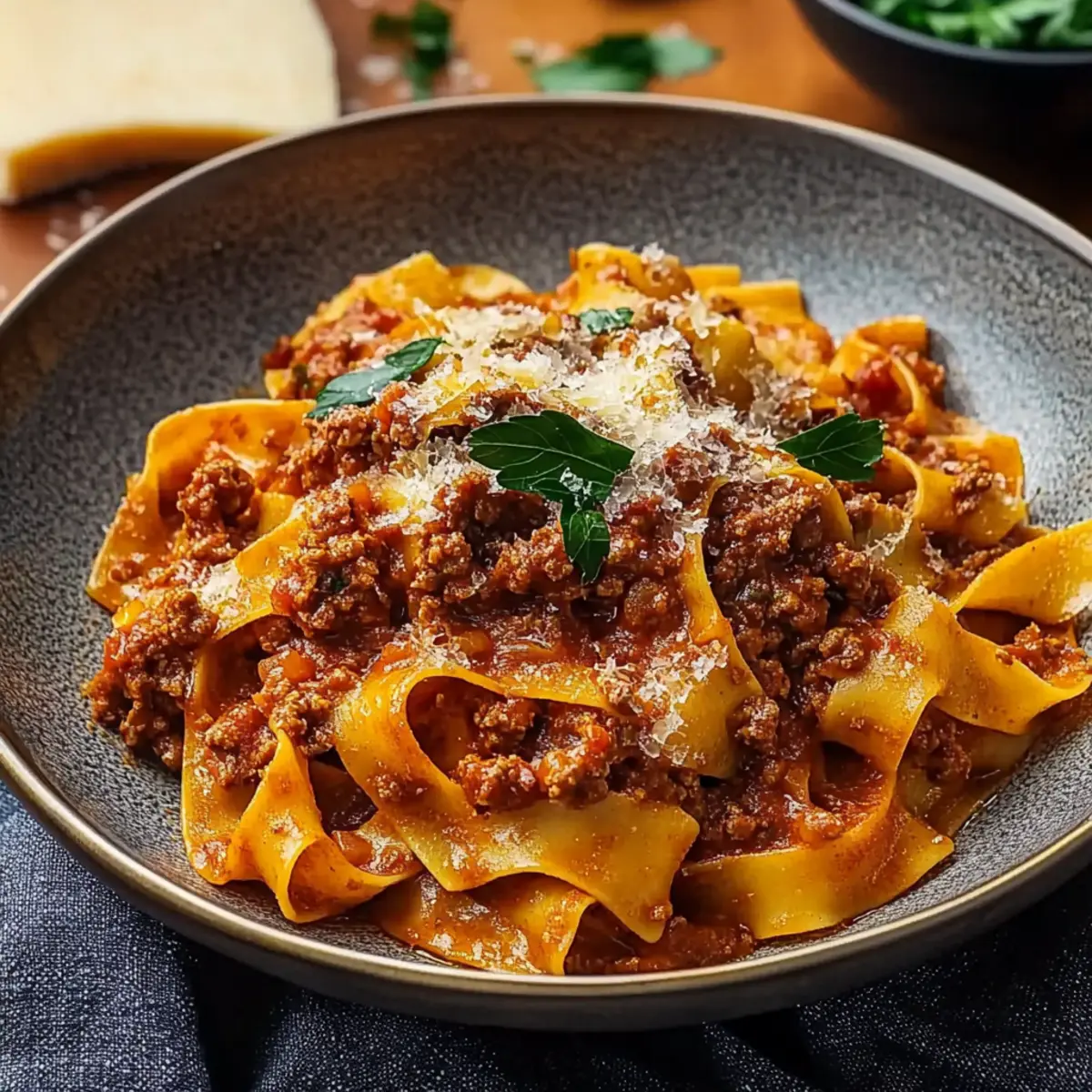
Hearty Pappardelle Bolognese for a Cozy Night In
Ingredients
Equipment
Method
- In a large pot, heat a generous splash of olive oil over medium heat. Add 150 grams of diced pancetta or bacon and sauté for about 5 minutes until crispy and golden.
- Introduce one finely chopped medium onion, one diced carrot, and one diced celery stalk to the pot. Cook for about 8-10 minutes until they soften and become fragrant.
- Stir in 500 grams of ground beef, breaking it apart as it cooks. Allow it to brown for about 5-7 minutes.
- Mix in 2 tablespoons of tomato paste, then pour in 1 cup of dry red wine. Let it simmer for about 2-3 minutes until the wine reduces slightly.
- Add 1 cup of crushed tomatoes, 1 cup of beef stock, and 2 bay leaves to the pot. Stir everything together and bring to a gentle simmer. Cook uncovered for 1.5 to 2 hours.
- Stir in 1/2 cup of whole milk during the last 15 minutes of cooking to round out acidity.
- Bring a large pot of salted water to a boil. Cook 350-400 grams of dried pappardelle according to the package instructions, usually around 8-10 minutes, until al dente.
- Toss the cooked pappardelle into the pot with the Bolognese sauce, gently mixing to coat the pasta.
- Plate the Pappardelle Bolognese and finish with freshly grated Parmigiano-Reggiano and a sprinkle of chopped fresh parsley or basil.
Leave a Reply