
The sizzling sound of shrimp hitting a hot skillet can awaken your senses like nothing else. Today, I’m excited to share my take on a beloved classic: Quick & Creamy Thai Coconut Shrimp Curry. This delightful dish not only brings the exotic flavors of Thai cuisine to your dinner table but also offers a fantastic option for busy weeknights with its quick prep time—perfect for anyone tired of fast food. With every spoonful of creamy coconut sauce, you’ll experience the joy of a dish that feels both indulgent and wholesome. Plus, it’s easily customizable with fresh vegetables or proteins, making it a versatile favorite for every cook. Are you ready to explore the delicious magic of Thai Coconut Shrimp Curry? Let’s dive in!
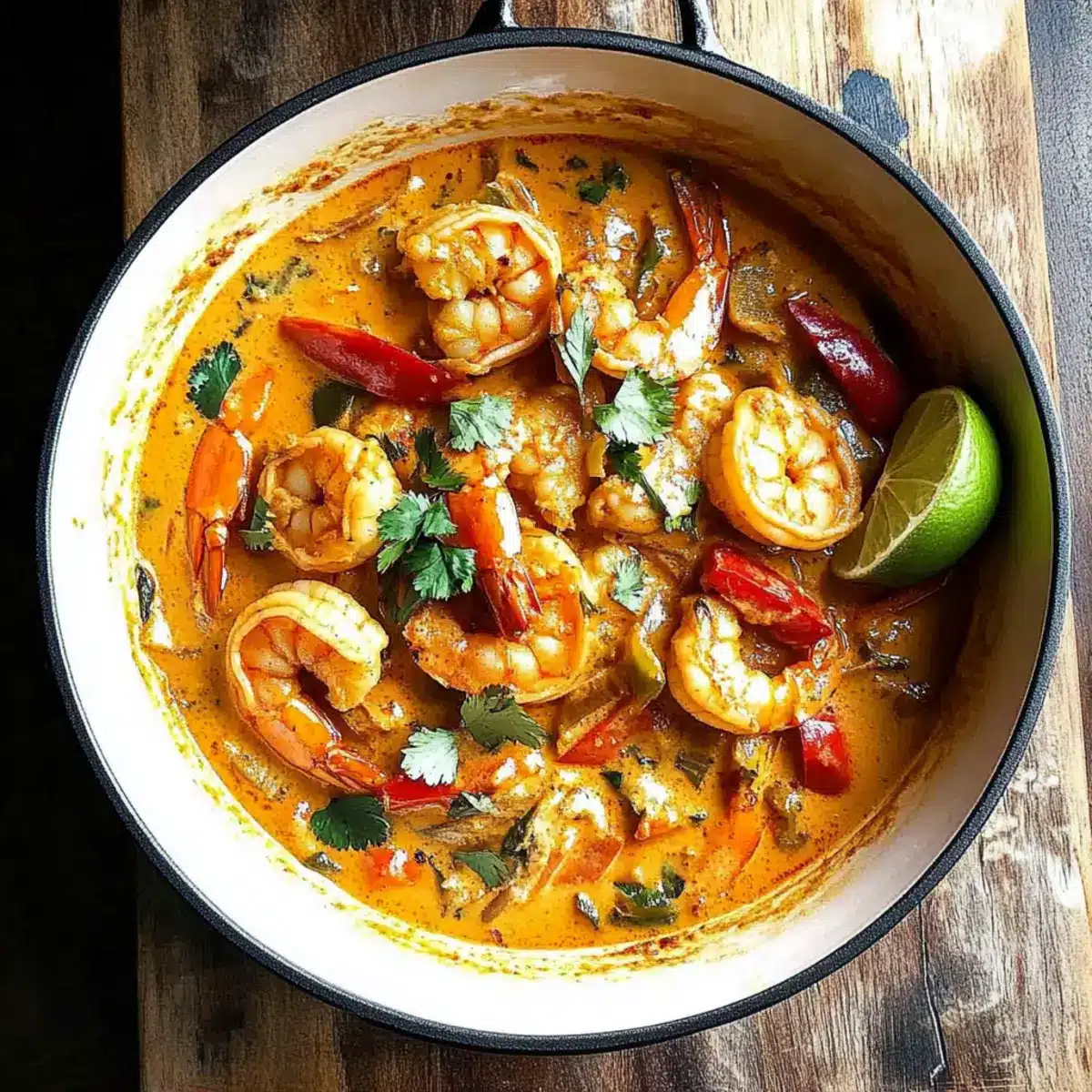
What makes this curry a must-try?
Quick Prep Time: In just 30 minutes, you’ll whip up a restaurant-quality meal at home, perfect for busy weeknights.
Creamy Bliss: The luscious coconut milk blends beautifully with the spices, creating a divine sauce that envelops each bite.
Versatile Ingredients: This recipe allows you to swap shrimp for chicken or tofu, and customize with your favorite veggies like snap peas or bell peppers.
Crowd-Pleaser: Impress guests with this flavorful dish—great for dinner parties or family gatherings, it’s sure to please everyone!
Healthy Twist: Enjoy a satisfying meal that’s not only tasty but also balanced, with proteins and healthy fats, all while being gluten-free option-friendly.
For extra flavor, why not pair it with a refreshing Thai Mango Cucumber Salad or serve over jasmine rice for a full meal experience?
Thai Coconut Shrimp Curry Ingredients
• Essential for Creating Flavor:
Shrimp – Offers protein and seafood flavor; use peeled and deveined for ease.
Low Sodium Soy Sauce – Adds umami and saltiness without overwhelming the dish.
Red Pepper Flakes – Introduces a gentle heat; adjust to match your spice preference.
Turmeric – Offers warm flavor and coloring; ground turmeric works well as a substitute.
Garlic Powder – Enhances flavor depth with ease; fresh garlic provides a stronger taste.
White Pepper – Adds a mild spice; feel free to substitute with black pepper if preferred.
Vegetable Oil & Unsalted Butter – Used for cooking shrimp and sautéing vegetables; use any cooking oil you prefer.
• Veggies for Texture and Nutrition:
Bell Pepper – Provides sweetness and crunch; substitute with zucchini or baby bok choy for a twist.
Fresh Garlic & Ginger – Aromatics that deliver robust flavor; grate them for optimal release.
Shallot – Adds sweetness and depth; onion works in a pinch.
• Building a Flavorful Base:
Chicken or Vegetable Broth – Liquid base for the sauce; vegetable broth is great for vegetarian options.
Thai Red Curry Paste – The heart of the dish; swap with green curry paste for a different flavor profile.
Brown Sugar – Balances flavors with sweetness; feel free to use honey or sugar alternatives.
Ground Cumin & Coriander – Provide earthy notes to complement the curry.
Fish Sauce – Adds depth and savory umami; omit for a vegetarian dish.
• Creaminess and Brightness:
Coconut Milk – Key ingredient for creaminess; choose full-fat for richness or light coconut milk for fewer calories.
Lime Juice – Brightens the dish with acidity; adjust to taste.
Sriracha – A spicy kick; optional for those who prefer mild heat.
Fresh Thai Basil – Offers herbal notes; replace with regular basil if necessary.
• Finishing Touches:
Toppings (scallions, fried onions, cilantro, chili pepper) – Enhance presentation and add extra flavor layers.
With these ingredients, you’re on your way to making a delightful Thai Coconut Shrimp Curry that’s both quick and easy!
Step‑by‑Step Instructions for Thai Coconut Shrimp Curry
Step 1: Prep the Shrimp
In a mixing bowl, combine peeled and deveined shrimp with low sodium soy sauce, red pepper flakes, turmeric, garlic powder, and white pepper. Toss the shrimp to coat evenly with the seasonings, then set aside to marinate for about 10 minutes while you prepare the other ingredients.
Step 2: Chop Aromatics
Grate the fresh garlic and ginger, and finely chop the shallot. Slice the bell pepper into thin strips or bite-sized pieces based on your preference. This colorful medley will add beautiful texture and flavor to your Thai Coconut Shrimp Curry, so have all your veggies ready for quick cooking.
Step 3: Sear the Shrimp
Heat a large skillet over medium-high heat, adding a drizzle of vegetable oil and a small pat of unsalted butter. Once hot, add the marinated shrimp to the skillet. Sear each side for about 1 minute until they turn pink and opaque, then remove the shrimp from the skillet and set aside to prevent overcooking.
Step 4: Cook the Vegetables
In the same skillet, sauté the sliced bell pepper for about 5 minutes until tender, stirring frequently. Add the grated garlic, ginger, and chopped shallot, cooking for an additional 2 minutes until fragrant. This step will infuse your Thai Coconut Shrimp Curry with robust flavors, so keep an eye on them for even cooking.
Step 5: Deglaze & Combine
Pour in the chicken or vegetable broth, scraping the bottom of the skillet to lift up any flavorful bits. Stir in the Thai red curry paste, brown sugar, cumin, coriander, turmeric, white pepper, soy sauce, and fish sauce. Let this simmer for about 1 minute, allowing the flavors to meld beautifully together.
Step 6: Add Coconut Milk
Gradually stir in the coconut milk and bring the mixture to a gentle boil over medium heat. Once bubbling, reduce the heat and let it simmer for about 5 minutes until the sauce thickens slightly and becomes luxurious. This creamy component is the heart of your Thai Coconut Shrimp Curry, so stir occasionally to avoid sticking.
Step 7: Finish the Dish
Mix in the lime juice and optional sriracha for a touch of heat. Add the seared shrimp back to the skillet, cooking for no more than 1 minute just to warm them through. This final step ensures the shrimp retain their tender texture while absorbing the rich, flavorful sauce.
Step 8: Serve
Spoon the luscious Thai Coconut Shrimp Curry over a bed of jasmine rice or cauliflower rice. Garnish generously with fresh cilantro, fried onions, and sliced chili peppers for an enticing presentation. Take a moment to admire your delicious creation before diving in for that first mouthwatering bite!
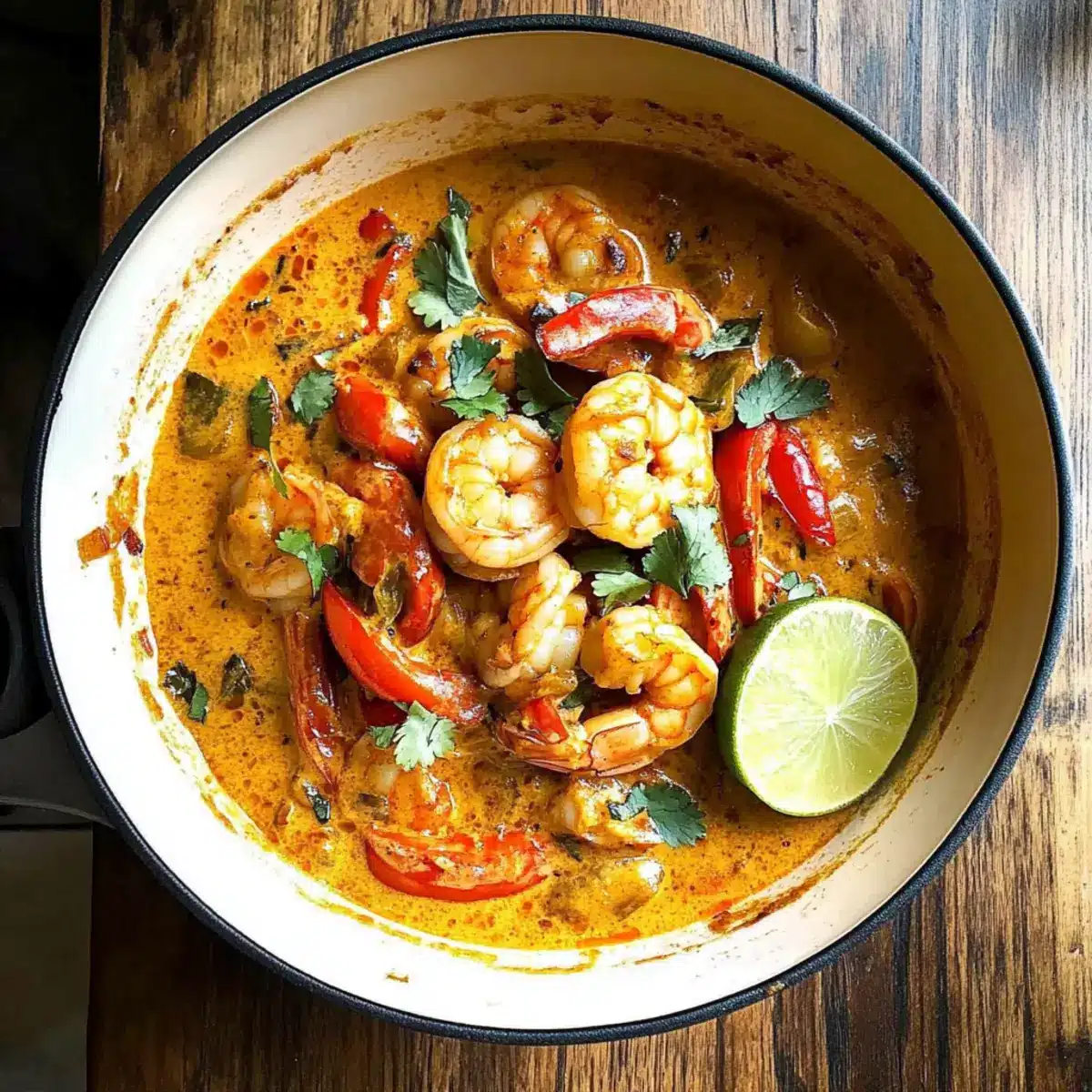
Expert Tips for Thai Coconut Shrimp Curry
- Prep Ahead: Ensure all ingredients are prepped before starting to cook; this makes for a smoother and faster cooking process.
- Adjust Spice Level: Start with a smaller amount of red curry paste; you can always add more if you prefer extra heat in your Thai Coconut Shrimp Curry.
- Thicken the Sauce: Allow the coconut milk to simmer, which will thicken the curry nicely and enhance its creamy texture.
- Storing Leftovers: To retain the shrimp’s tenderness, store leftover sauce separately and avoid reheating them together—this keeps shrimp from getting rubbery.
- Veggie Variations: Feel free to swap in your favorite vegetables like zucchini or snap peas; this customization makes your Thai Coconut Shrimp Curry even more enjoyable!
How to Store and Freeze Thai Coconut Shrimp Curry
- Room Temperature: It’s best to avoid leaving Thai Coconut Shrimp Curry out for longer than 2 hours to prevent spoilage.
- Fridge: Store any leftovers in an airtight container for up to 3 days. Keep the shrimp and sauce combined for best flavor retention, but remember to stir well before reheating.
- Freezer: You can freeze the coconut curry (without shrimp) for up to 2 months. Cool the sauce completely, then transfer to freezer-safe bags. Shrimp can be added during reheating for fresh taste.
- Reheating: Thaw overnight in the fridge and gently reheat on the stove over low heat, adding a splash of broth or coconut milk if necessary to revive the creamy consistency.
What to Serve with Quick & Creamy Thai Coconut Shrimp Curry
Dive into a culinary adventure that beautifully marries vibrant flavors and nourishing elements to create a meal that satisfies the soul.
- Jasmine Rice: A fragrant base that absorbs the creamy sauce, making each bite a warm embrace for your taste buds.
- Cauliflower Rice: A low-carb alternative that pairs perfectly, offering a light yet satisfying texture, great for a health-conscious meal.
- Thai Mango Cucumber Salad: This refreshing, crunchy salad brings a bright contrast to the rich curry, enhancing your dining experience with its tropical flair.
- Fresh Spring Rolls: Crisp, fresh veggies wrapped in rice paper create a delightful textural contrast that complements the curry’s creaminess beautifully.
- Grilled Eggplant: Its smoky flavor and tender texture harmonize wonderfully with the dish, adding a delicious heartiness that’s hard to resist.
- Mint Lemonade: A zesty drink that cleanses the palate between bites, enhancing the bright, aromatic elements of your meal.
- Lime Wedges: A spritz of fresh lime juice over the curry adds a tangy note that brightens every rich, creamy bite.
- Toasted Coconut Chips: These not only add a pleasing crunch but also elevate the coconut flavor in your curry, making it taste like a tropical paradise.
- Chocolate Mousse: For a decadent dessert that leaves a sweet note on your palate, the lightness of mousse contrasts with the meal’s rich profile perfectly.
Thai Coconut Shrimp Curry Variations
Feel free to get creative and put your personal spin on this delightful curry, embracing flavors that excite your palate!
- Dairy-Free: Use coconut cream or any plant-based milk instead of regular dairy for a rich, creamy texture.
- Protein Swap: Replace shrimp with chicken, tofu, or chickpeas for a different taste while maintaining that delicious curry flavor. There are endless possibilities!
- Veggie Boost: Incorporate seasonal favorites like snap peas, carrots, or spinach to add vibrant colors and extra nutrients to your dish. The more, the merrier!
- Sweet & Spicy: Add mango chunks for a touch of sweetness paired with the existing spice; this fruity twist brightens up the flavor profile beautifully!
- Heat Levels: For heat lovers, increase the red pepper flakes or add a drizzle of chili oil before serving to ignite the flavors even more.
- Herb Variety: Experiment with cilantro, parsley, or mint instead of Thai basil for a unique flavor twist that complements the creamy sauce perfectly.
- Full-of-Flavors Rice: Instead of plain rice, serve on a bed of coconut jasmine rice to enhance the overall taste and tie the dish together.
- Shortcut Options: Try using pre-cooked shrimp for an even quicker meal if you’re in a rush—perfect for those busy weeknights!
Ready for more culinary inspiration? You can try adding a delightful touch of freshness with a side of Thai Mango Cucumber Salad or elevate the meal with some delicious Sweet Coconut Cream to turn dinner into a mini feast!
Make Ahead Options
These Quick & Creamy Thai Coconut Shrimp Curry preparations are perfect for busy cooks! You can marinate the shrimp with soy sauce and spices up to 24 hours in advance to enhance the flavors. Additionally, the sauce can be prepared and refrigerated for up to 3 days; simply store it in an airtight container to maintain its rich, creamy quality. When you’re ready to serve the dish, gently reheat the sauce and add fresh shrimp, cooking for just 1 minute until warmed through for optimal tenderness. This way, you’ll enjoy a delicious meal that feels homemade, without the stress of same-day cooking!
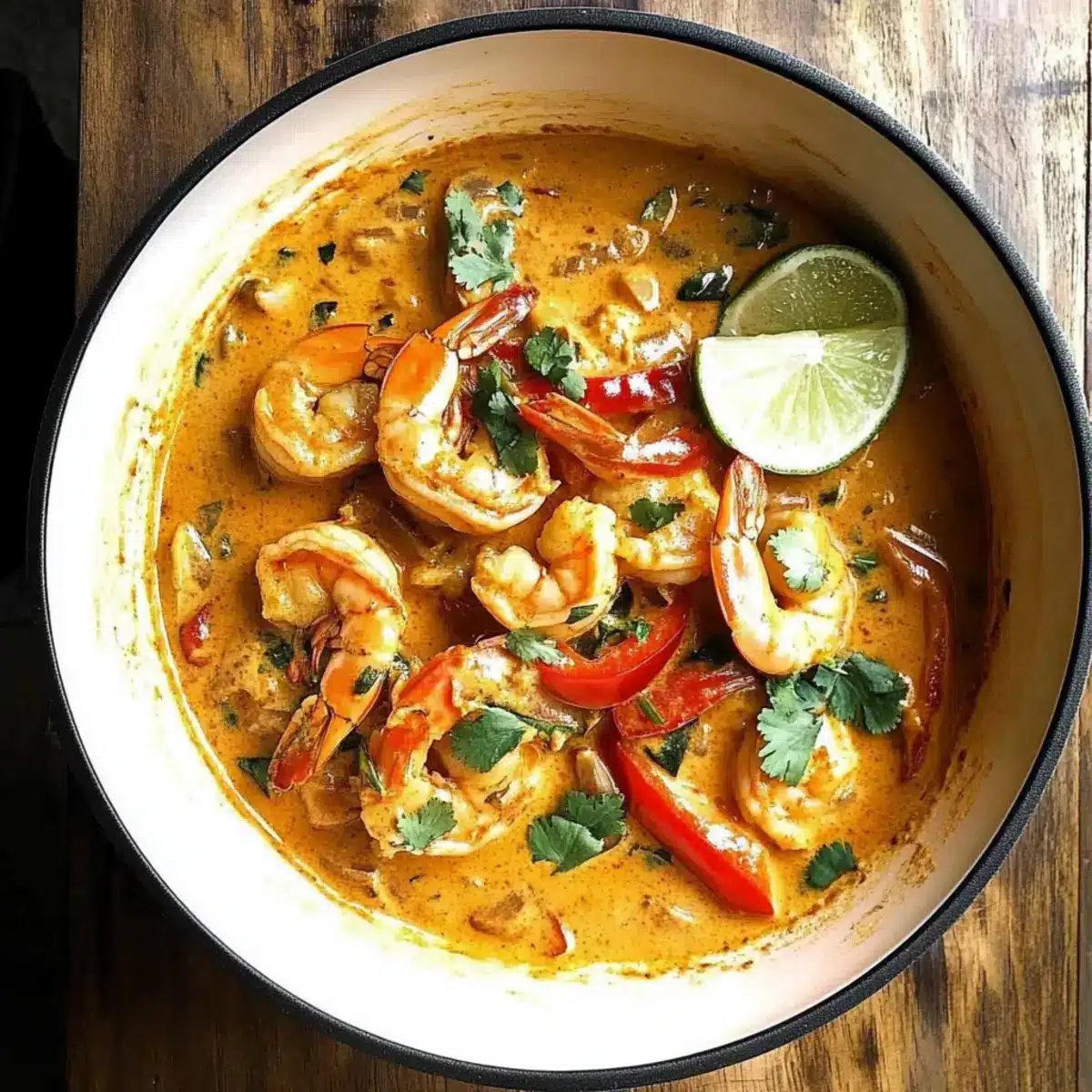
Thai Coconut Shrimp Curry Recipe FAQs
What kind of shrimp should I use for this curry?
Absolutely! For the best results, opt for peeled and deveined shrimp, as they save you time and make cooking easier. Fresh shrimp is ideal, but if you’re using frozen, ensure it’s fully thawed before cooking to maintain the best texture.
How should I store leftovers?
You can store any leftover Thai Coconut Shrimp Curry in an airtight container in the refrigerator for up to 3 days. If possible, I recommend keeping the shrimp and sauce together, as this helps retain their flavors. Just stir well before reheating for an even taste.
Can I freeze Thai Coconut Shrimp Curry?
Yes, you can freeze the curry! Pour the cooled coconut sauce (without shrimp) into freezer-safe bags and seal tightly, leaving some room for expansion. It can last up to 2 months in the freezer. When you’re ready to enjoy it again, just thaw overnight in the refrigerator, reheat gently on the stove, and add your shrimp during reheating to keep them fresh and tender.
What should I do if the sauce is too thin?
If you’re finding your sauce is thinner than desired, cook it a bit longer over low heat to allow it to reduce and thicken. Keep stirring to prevent any sticking to the bottom of the pan. Alternatively, you can create a slurry by mixing 1 tablespoon of cornstarch with water and adding it to the sauce to help thicken it up.
Are there any dietary considerations for this recipe?
Very much so! This recipe can be easily customized for various dietary needs. If you want to make it vegetarian, simply replace shrimp with tofu and omit the fish sauce. For gluten-free options, ensure you use a gluten-free soy sauce. Always check labels for any allergens, especially if you’re catering to specific dietary preferences, such as shellfish allergies.
Can I substitute the vegetable options in this recipe?
Definitely! The beauty of the Thai Coconut Shrimp Curry lies in its versatility. Feel free to replace bell peppers with your favorite veggies such as zucchini, snap peas, or carrots. I often incorporate spinach or baby bok choy for added nutrition and color. Don’t be shy—get creative with what you have on hand!
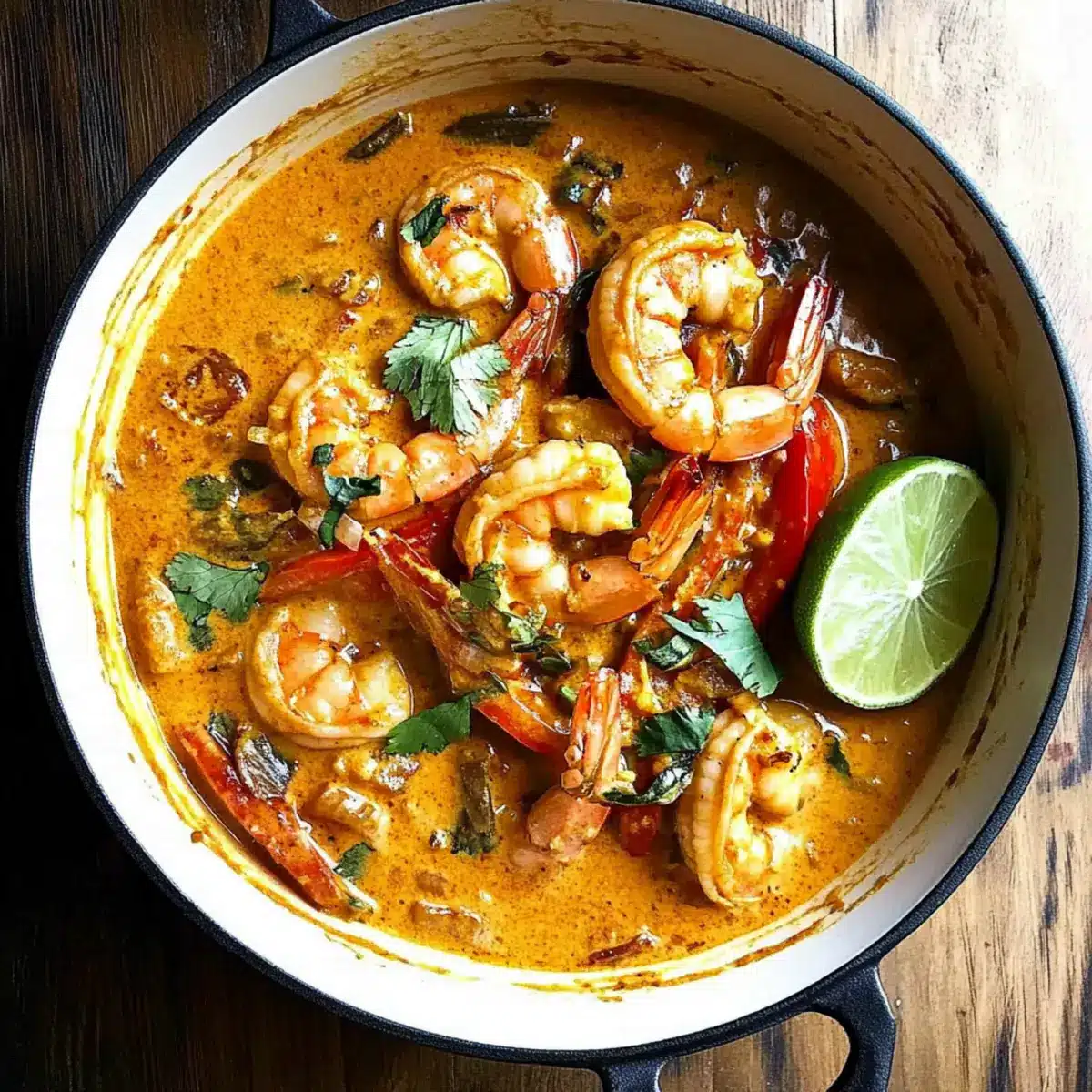
Delicious Thai Coconut Shrimp Curry in Just 30 Minutes
Ingredients
Equipment
Method
- In a mixing bowl, combine peeled and deveined shrimp with low sodium soy sauce, red pepper flakes, turmeric, garlic powder, and white pepper. Toss to coat evenly and set aside for 10 minutes.
- Grate the fresh garlic and ginger, and finely chop the shallot. Slice the bell pepper into strips or bite-sized pieces.
- Heat a skillet over medium-high heat with vegetable oil and butter. Add marinated shrimp and sear for 1 minute on each side until pink. Remove from skillet.
- In the same skillet, sauté bell pepper for 5 minutes. Add garlic, ginger, and shallot, cooking for 2 more minutes.
- Pour in broth and stir in red curry paste, brown sugar, cumin, coriander, turmeric, white pepper, soy sauce, and fish sauce. Simmer for 1 minute.
- Gradually stir in coconut milk and bring to a gentle boil. Simmer for 5 minutes until the sauce thickens.
- Mix in lime juice and optional sriracha. Add shrimp back and cook for 1 minute to warm through.
- Serve over jasmine rice or cauliflower rice, garnished with cilantro, fried onions, and sliced chili peppers.
Leave a Reply